


- Afhalen na 1 uur in een winkel met voorraad
- Gratis thuislevering in België vanaf € 30
- Ruim aanbod met 7 miljoen producten
- Afhalen na 1 uur in een winkel met voorraad
- Gratis thuislevering in België vanaf € 30
- Ruim aanbod met 7 miljoen producten





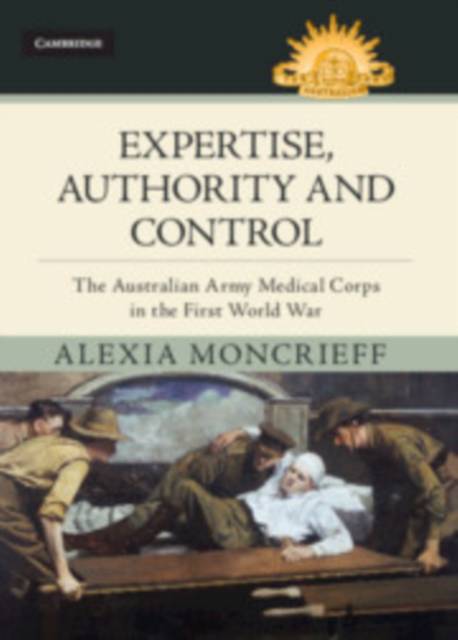
Expertise, Authority and Control
The Australian Army Medical Corps in the First World War
Alexia Moncrieff
€ 84,45
+ 168 punten
Omschrijving
Expertise, Authority and Control charts the development of Australian military medicine in the First World War in the first major study of the Australian Army Medical Corps in over seventy years. It examines the provision of medical care to Australian soldiers during the Dardanelles campaign and explores the imperial and medical-military hierarchies that were blended and challenged during the campaign. By the end of 1918, the AAMC was a radically different organisation. Using army orders, unit war diaries and memoranda written to disseminate information within the Australian Imperial Forces (AIF) and between British and Australian soldiers, it maps the provision of medical care through casualty clearance and evacuation, rehabilitation, and the prevention and treatment of venereal disease. In doing so, she reassesses Australian military medicine and maps the transition to an infrastructure for the AIF in the field, especially in response to conflicts with traditional imperial, military and medical hierarchies.
Specificaties
Betrokkenen
- Auteur(s):
- Uitgeverij:
Inhoud
- Aantal bladzijden:
- 236
- Taal:
- Engels
- Reeks:
Eigenschappen
- Productcode (EAN):
- 9781108478151
- Verschijningsdatum:
- 11/02/2020
- Uitvoering:
- Hardcover
- Formaat:
- Genaaid
- Afmetingen:
- 157 mm x 206 mm
- Gewicht:
- 498 g


Alleen bij Standaard Boekhandel
+ 168 punten op je klantenkaart van Standaard Boekhandel
Cadeau

AANGERADEN


Beoordelingen
We publiceren alleen reviews die voldoen aan de voorwaarden voor reviews. Bekijk onze voorwaarden voor reviews.