



Je cadeautjes zeker op tijd in huis hebben voor de feestdagen? Kom langs in onze winkels en vind het perfecte geschenk!
- Afhalen na 1 uur in een winkel met voorraad
- Gratis thuislevering in België vanaf € 30
- Ruim aanbod met 7 miljoen producten
Je cadeautjes zeker op tijd in huis hebben voor de feestdagen? Kom langs in onze winkels en vind het perfecte geschenk!
- Afhalen na 1 uur in een winkel met voorraad
- Gratis thuislevering in België vanaf € 30
- Ruim aanbod met 7 miljoen producten





€ 88,45
+ 176 punten
Omschrijving
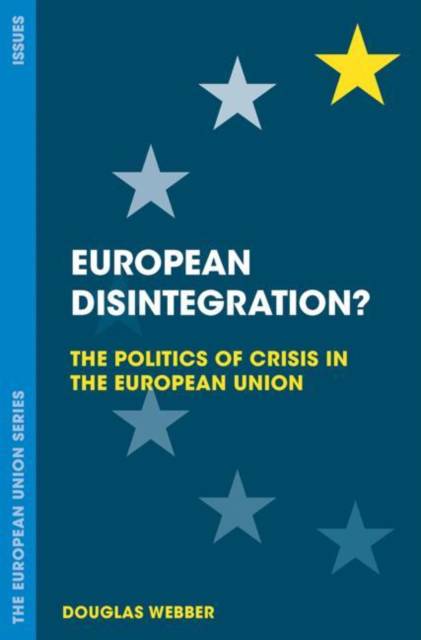
This new book provides a comprehensive analysis of Europe on the brink of political disintegration. Observers of the European Union (EU) could be forgiven for thinking that it is in a state of permanent crisis. The Union has been beset with high levels of Eurozone debt, Russian intervention and armed conflict in Ukraine, refugees fleeing conflict zones in North Africa and the Middle East, and the decision of Britain to leave the European Union. This text offers a concise and readable assessment of the dynamics, character and consequences of these four crises and the increasingly real possibility of European disintegration.
High levels of socio-economic interdependence and institutionalization have failed to result in an ever closer union, and yet the proposed theories of disintegration also fall short. Webber instead shows that it is only by looking at the role of the EU's dominant member, Germany, in each crisis that the potential for an increasingly fragmented Europe becomes clear. Until now, Germany has been the EU's stabilizing force but this is no longer guaranteed. The fate of the integration process will depend on whether other, more inclusive forms of stabilizing leadership may emerge to fill the vacuum created by Berlin's incapacity.
This text is the ideal companion for upper undergraduate and postgraduate students of the European Union, as part of degrees in politics, international relations or European studies, or for anyone interested in the crises of the European Union.
High levels of socio-economic interdependence and institutionalization have failed to result in an ever closer union, and yet the proposed theories of disintegration also fall short. Webber instead shows that it is only by looking at the role of the EU's dominant member, Germany, in each crisis that the potential for an increasingly fragmented Europe becomes clear. Until now, Germany has been the EU's stabilizing force but this is no longer guaranteed. The fate of the integration process will depend on whether other, more inclusive forms of stabilizing leadership may emerge to fill the vacuum created by Berlin's incapacity.
This text is the ideal companion for upper undergraduate and postgraduate students of the European Union, as part of degrees in politics, international relations or European studies, or for anyone interested in the crises of the European Union.
Specificaties
Betrokkenen
- Auteur(s):
- Uitgeverij:
Inhoud
- Aantal bladzijden:
- 262
- Taal:
- Engels
- Reeks:
- Reeksnummer:
- nr. 16
Eigenschappen
- Productcode (EAN):
- 9781137529466
- Verschijningsdatum:
- 29/11/2018
- Uitvoering:
- Paperback
- Formaat:
- Trade paperback (VS)
- Afmetingen:
- 182 mm x 238 mm
- Gewicht:
- 362 g



Alleen bij Standaard Boekhandel
+ 176 punten op je klantenkaart van Standaard Boekhandel
CADEAU


Beoordelingen
We publiceren alleen reviews die voldoen aan de voorwaarden voor reviews. Bekijk onze voorwaarden voor reviews.