


- Afhalen na 1 uur in een winkel met voorraad
- Gratis thuislevering in België vanaf € 30
- Ruim aanbod met 7 miljoen producten
- Afhalen na 1 uur in een winkel met voorraad
- Gratis thuislevering in België vanaf € 30
- Ruim aanbod met 7 miljoen producten





Omschrijving
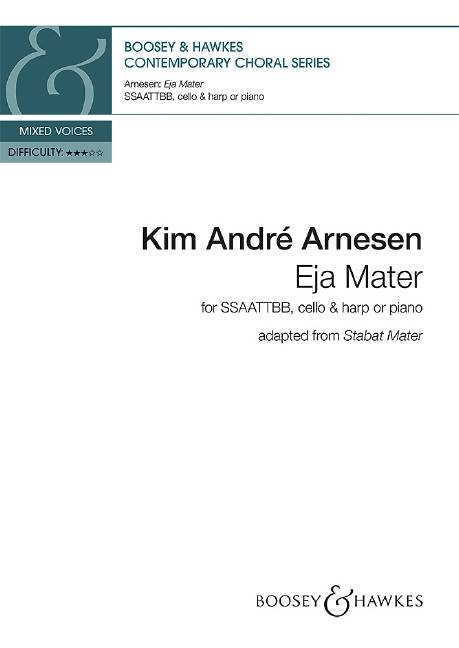
Adapted from a movement of Arnesen’s Stabat Mater for upper choral voices and orchestra, Eja Mater is arranged for mixed choral voices, violoncello and harp (or piano). This part of the Stabat Mater is a prayer to the Mother of Christ, but Eja Mater is also a prayer of comfort for all parents who have lost a child of their own. As Mary is called ‘fountain of love’ (fons amoris) in the Latin text from the 13th century, the piece also expresses the love of parents for their own children. Simple broken chords in the harp/piano accompanying the choir almost throughout the piece, as well as a soothing and sustained choral texture accompany the main melody first introduced in the cello. This melody is passed back and forth between the choral voices and the violoncello while maintaining its calm beauty, spiced with an occasional hint of lament and sorrow. Arnesen’s characteristic rich harmonic language pervades this piece as well, not least in a short a cappella passage. A deeply expressive work suitable for intermediate choirs.
Instrumentation:
mixed choir (SSAATTBB), cello and harp (piano)
Instrumentation:
mixed choir (SSAATTBB), cello and harp (piano)
Specificaties
Betrokkenen
- Uitgeverij:
Inhoud
- Aantal bladzijden:
- 20
- Taal:
- Latijn
- Reeks:
Eigenschappen
- Productcode (EAN):
- 9781784546243
- Verschijningsdatum:
- 9/09/2020
- Afmetingen:
- 185 mm x 260 mm
- Gewicht:
- 47 g

Alleen bij Standaard Boekhandel
+ 9 punten op je klantenkaart van Standaard Boekhandel
Cadeau

AANGERADEN


Beoordelingen
We publiceren alleen reviews die voldoen aan de voorwaarden voor reviews. Bekijk onze voorwaarden voor reviews.