


- Afhalen na 1 uur in een winkel met voorraad
- Gratis thuislevering in België vanaf € 30
- Ruim aanbod met 7 miljoen producten
- Afhalen na 1 uur in een winkel met voorraad
- Gratis thuislevering in België vanaf € 30
- Ruim aanbod met 7 miljoen producten





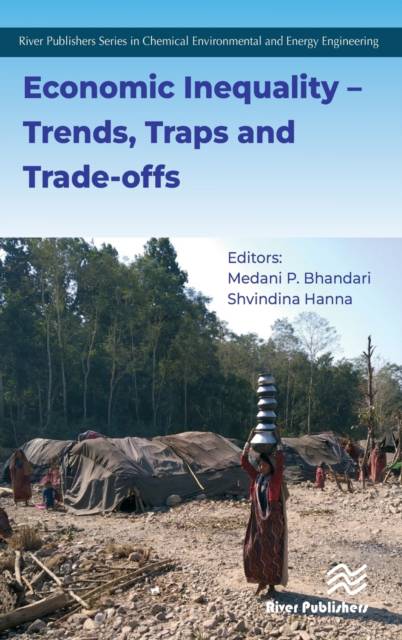
Economic Inequality - Trends, Traps and Trade-offs
€ 198,45
+ 396 punten
Omschrijving
The book "Economic Inequality - Trends, Traps and Trade-offs" presents the unexplored issues of economic inequality, including case studies of various countries. Inequality is a chronic divisive factor of society. It is well known that inequalities (such as economic, social, cultural, religious, geographical, etc.) have been omnipresent in human society. Inequalities can be found within each family, each community, and each nation and thus globally. Inequality is a major cause of political, economic, social instability, and creates crisis and conflict within society. A major cause of inequality is unequal, uneven, biased, power centric distributions of human economic, social, political, cultural and spiritual human necessities.
The edited book examines the major parameters of the socio-economic issues of inequality and focuses on the key economic issues of inequality, namely, income and wealth distribution, equity & equality of outcome, and equality of opportunities. Economic inequality is measured by wealth, income dsiproportions in distribution and consumption patterns in a specific area. Mostly, inequality is measured using various statistical tools including the Gini Coefficient, inequality adjusted human development index, 20:20 ratio, Palma ratio, Hoover index, Galt score, Coefficient of variation, Theil index, wage share etc. However, not all income can be measured by these tools. By using case studies, this book encourages us to reframe economic development through the lens of growing inequalities and disparities. Economic growth per se is disproportional, and the efforts of scholars, practitioners and policymakers should be directed to empower the marginalized of society in a way that 'no one should left behind' (UN Slogan). The main challenges and focus of every chapter are different, and yet in combination, they give an integrated understanding of the phenomenon of economic aspects of inequality. This book will be useful to policymakers, social and environmental activists, agencies, educators and practitioners in the sphere of economic inequality. The methodology of the research can be replicated and taken forward by future researchers in the field.
Technical topics discussed in the book include:
Inequality the problems of all times;
Can inequality be reduced through SDGs?
Problems and consequences inequality
Inequalities Level Estimation
Threat to The Sustainable Development
Forecasting Inequality
Liberal Socialism
CORONOMICS
Specificaties
Betrokkenen
- Uitgeverij:
Inhoud
- Aantal bladzijden:
- 342
- Taal:
- Engels
- Reeks:
Eigenschappen
- Productcode (EAN):
- 9788770223911
- Verschijningsdatum:
- 10/08/2021
- Uitvoering:
- Hardcover
- Formaat:
- Genaaid
- Afmetingen:
- 156 mm x 234 mm
- Gewicht:
- 657 g


Alleen bij Standaard Boekhandel
+ 396 punten op je klantenkaart van Standaard Boekhandel
Cadeau

AANGERADEN


Beoordelingen
We publiceren alleen reviews die voldoen aan de voorwaarden voor reviews. Bekijk onze voorwaarden voor reviews.