



Je cadeautjes zeker op tijd in huis hebben voor de feestdagen? Kom langs in onze winkels en vind het perfecte geschenk!
- Afhalen na 1 uur in een winkel met voorraad
- Gratis thuislevering in België vanaf € 30
- Ruim aanbod met 7 miljoen producten
Je cadeautjes zeker op tijd in huis hebben voor de feestdagen? Kom langs in onze winkels en vind het perfecte geschenk!
- Afhalen na 1 uur in een winkel met voorraad
- Gratis thuislevering in België vanaf € 30
- Ruim aanbod met 7 miljoen producten





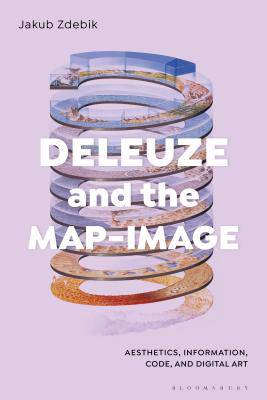
Deleuze and the Map-Image
Aesthetics, Information, Code, and Digital Art
Jakub Zdebik
Hardcover | Engels
€ 254,45
+ 508 punten
Omschrijving
The map, as it appears in Gilles Deleuze's writings, is a concept guiding the exploration of new territories, no matter how abstract. With the advent of new media and digital technologies, contemporary artists have imagined a panoply of new spaces that put Deleuze's concept to the test. Deleuze's concept of the map bridges the gap between the analog and the digital, information and representation, virtual and actual, canvas and screen and is therefore best suited for the contemporary artistic landscape.
Deleuze and the Map-Image explores cartography from philosophical and aesthetic perspectives and argues that the concept of the map is a critical touchstone for contemporary multidisciplinary art. This book is an overview of Deleuze's cartographic thought read through the theories of Sloterdijk, Heidegger, and Virilio and the art criticism of Laura U. Marks, Carolyn L. Kane, and Alexander Galloway, shaping it into a critical tool through which to view the works of cutting edge artists such as Janice Kerbel and Hajra Waheed, who work with digital and analog art. After all, Deleuze did write that a map can be conceived as a work of art, and so herein art is critiqued through cartographic strategies.
Deleuze and the Map-Image explores cartography from philosophical and aesthetic perspectives and argues that the concept of the map is a critical touchstone for contemporary multidisciplinary art. This book is an overview of Deleuze's cartographic thought read through the theories of Sloterdijk, Heidegger, and Virilio and the art criticism of Laura U. Marks, Carolyn L. Kane, and Alexander Galloway, shaping it into a critical tool through which to view the works of cutting edge artists such as Janice Kerbel and Hajra Waheed, who work with digital and analog art. After all, Deleuze did write that a map can be conceived as a work of art, and so herein art is critiqued through cartographic strategies.
Specificaties
Betrokkenen
- Auteur(s):
- Uitgeverij:
Inhoud
- Aantal bladzijden:
- 224
- Taal:
- Engels
Eigenschappen
- Productcode (EAN):
- 9781501346781
- Verschijningsdatum:
- 30/05/2019
- Uitvoering:
- Hardcover
- Formaat:
- Genaaid
- Afmetingen:
- 150 mm x 231 mm
- Gewicht:
- 566 g


Alleen bij Standaard Boekhandel
+ 508 punten op je klantenkaart van Standaard Boekhandel
CADEAU


Beoordelingen
We publiceren alleen reviews die voldoen aan de voorwaarden voor reviews. Bekijk onze voorwaarden voor reviews.