



Je cadeautjes zeker op tijd in huis hebben voor de feestdagen? Kom langs in onze winkels en vind het perfecte geschenk!
- Afhalen na 1 uur in een winkel met voorraad
- Gratis thuislevering in België vanaf € 30
- Ruim aanbod met 7 miljoen producten
Je cadeautjes zeker op tijd in huis hebben voor de feestdagen? Kom langs in onze winkels en vind het perfecte geschenk!
- Afhalen na 1 uur in een winkel met voorraad
- Gratis thuislevering in België vanaf € 30
- Ruim aanbod met 7 miljoen producten





€ 81,45
+ 162 punten
Uitvoering
Omschrijving
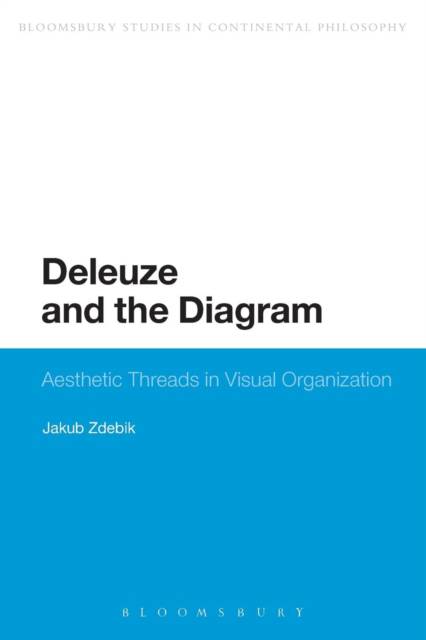
Deleuze and the Diagram charts Deleuze's corpus according to aesthetic concepts such as the map, the sketch and the drawing to bring out a comprehensive concept of the diagram. In his interrogation of Deleuze's visual aesthetic theory, Jakub Zdebik focuses on artists that hold an important place in Deleuze's system. The art of Paul Klee and Francis Bacon is presented as the visual manifestation of Deleuze's philosophy and yields novel ways of assessing visual culture. Zdebik goes on to compare Deleuze's philosophy with the visual theories of Foucault, Lyotard and Simondon, as well as the aesthetic philosophy of Heidegger and Kant. He shows how the visual and aesthetic elements of the diagram shed new light on Deleuze's writings.
Deleuze conceptualized his theory as a form of painting, saying that, like art, it needed to shift from figuration to abstraction. This book focuses on the visual devices in Deleuze's work and uses the concept of the diagram to describe the relationship between philosophy and art and to formulate a way to think about philosophy through art.
Deleuze conceptualized his theory as a form of painting, saying that, like art, it needed to shift from figuration to abstraction. This book focuses on the visual devices in Deleuze's work and uses the concept of the diagram to describe the relationship between philosophy and art and to formulate a way to think about philosophy through art.
Specificaties
Betrokkenen
- Auteur(s):
- Uitgeverij:
Inhoud
- Aantal bladzijden:
- 256
- Taal:
- Engels
- Reeks:
Eigenschappen
- Productcode (EAN):
- 9781472526199
- Verschijningsdatum:
- 16/01/2014
- Uitvoering:
- Paperback
- Formaat:
- Trade paperback (VS)
- Afmetingen:
- 155 mm x 231 mm
- Gewicht:
- 362 g


Alleen bij Standaard Boekhandel
+ 162 punten op je klantenkaart van Standaard Boekhandel
CADEAU


Beoordelingen
We publiceren alleen reviews die voldoen aan de voorwaarden voor reviews. Bekijk onze voorwaarden voor reviews.