


- Afhalen na 1 uur in een winkel met voorraad
- Gratis thuislevering in België vanaf € 30
- Ruim aanbod met 7 miljoen producten
- Afhalen na 1 uur in een winkel met voorraad
- Gratis thuislevering in België vanaf € 30
- Ruim aanbod met 7 miljoen producten





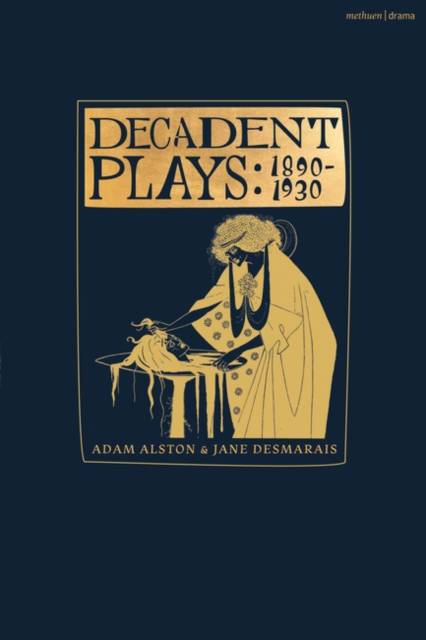
Decadent Plays
1890-1930: Salome; The Race of Leaves; The Orgy: A Dramatic Poem; Madame La Mort; Lilith; Ennoïa: A Triptych; The Black Maskers; La Gioconda; Ardiane and Barbe Bleue or, The Useless Deliverance; Kerria Japonica; The Dove
Michael Field, Lesya Ukrainka, Rachilde, Remy de Gourmont
Hardcover | Engels
€ 234,45
+ 468 punten
Omschrijving
Poisoned cigars, seductive apparitions, minds and empires in the last of their decline and the most notorious kiss in dramatic history - decadent plays challenged the moral as much as the dramatic imagination of their own day, and continue to probe horizons of taste and the possibilities of stagecraft.
In the late 19th and early 20th centuries, many writers reacted to urban modernity by embracing decadent themes and styles, and dramatists were no exception. Decadence offered these writers a framework for exploring nonconformist identities and beliefs that challenged behavioural norms as much as the desirability of modern progress. Decadent plays were at once behind the times in their celebration of antiquity, and forward-thinking in their staging of themes that have become all the more timely in the 21st century, including queerness, unconventional eroticism, and critiques of empire and industrial progress. Equally, the diversity of decadent drama cannot be pigeon-holed; many of these plays still have the capacity to offend worldviews, and invite us to interrogate present-day conventions and propriety.
International in scope and eclectic in content, this edited anthology is an authoritative and accessible introduction to a fast-expanding field of decadent literature. The first publication of its kind to deal with decadent drama, and featuring plays translated into English for the first time, Decadent Plays: 1890-1930 breaks new ground by foregrounding decadence as a dramatic sensibility in this most pivotal of periods in the history of modern drama.
Featuring canonical and little-known works by Oscar Wilde, Michael Field, Lesya Ukrainka, Rachilde, Remy de Gourmont, Jean Lorrain, Leonid Andreyev, Gabriele D'Annunzio, Maurice Maeterlinck, Izumi Kyoka, and Djuna Barnes, this anthology is an essential introduction to decadent drama that will pique the interest of specialists and non-specialists alike.
In the late 19th and early 20th centuries, many writers reacted to urban modernity by embracing decadent themes and styles, and dramatists were no exception. Decadence offered these writers a framework for exploring nonconformist identities and beliefs that challenged behavioural norms as much as the desirability of modern progress. Decadent plays were at once behind the times in their celebration of antiquity, and forward-thinking in their staging of themes that have become all the more timely in the 21st century, including queerness, unconventional eroticism, and critiques of empire and industrial progress. Equally, the diversity of decadent drama cannot be pigeon-holed; many of these plays still have the capacity to offend worldviews, and invite us to interrogate present-day conventions and propriety.
International in scope and eclectic in content, this edited anthology is an authoritative and accessible introduction to a fast-expanding field of decadent literature. The first publication of its kind to deal with decadent drama, and featuring plays translated into English for the first time, Decadent Plays: 1890-1930 breaks new ground by foregrounding decadence as a dramatic sensibility in this most pivotal of periods in the history of modern drama.
Featuring canonical and little-known works by Oscar Wilde, Michael Field, Lesya Ukrainka, Rachilde, Remy de Gourmont, Jean Lorrain, Leonid Andreyev, Gabriele D'Annunzio, Maurice Maeterlinck, Izumi Kyoka, and Djuna Barnes, this anthology is an essential introduction to decadent drama that will pique the interest of specialists and non-specialists alike.
Specificaties
Betrokkenen
- Auteur(s):
- Vertaler(s):
- Uitgeverij:
Inhoud
- Aantal bladzijden:
- 432
- Taal:
- Engels
Eigenschappen
- Productcode (EAN):
- 9781350171824
- Verschijningsdatum:
- 11/01/2024
- Uitvoering:
- Hardcover
- Formaat:
- Genaaid
- Afmetingen:
- 156 mm x 234 mm
- Gewicht:
- 780 g


Alleen bij Standaard Boekhandel
+ 468 punten op je klantenkaart van Standaard Boekhandel

Beoordelingen
We publiceren alleen reviews die voldoen aan de voorwaarden voor reviews. Bekijk onze voorwaarden voor reviews.