


Door de nationale actiedag kan je online bestelling iets langer onderweg zijn dan normaal. Dringend iets nodig? Reserveer en haal na 1u af in een winkel met voorraad.
- Afhalen na 1 uur in een winkel met voorraad
- Gratis thuislevering in België vanaf € 30
- Ruim aanbod met 7 miljoen producten
Door de nationale actiedag kan je online bestelling iets langer onderweg zijn dan normaal. Dringend iets nodig? Reserveer en haal na 1u af in een winkel met voorraad.
- Afhalen na 1 uur in een winkel met voorraad
- Gratis thuislevering in België vanaf € 30
- Ruim aanbod met 7 miljoen producten




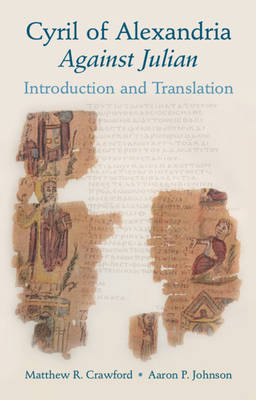
Cyril of Alexandria: Against Julian
Introduction and Translation
Hardcover | Engels
€ 322,45
+ 644 punten
Omschrijving
In 362/363 the Roman emperor Julian composed a treatise titled Against the Galileans in which he set forth his reasons for abandoning Christianity and returning to devotion to the traditional Greco-Roman deities. Sixty years later Cyril, bishop of Alexandria, composed a response. His resulting treatise Against Julian would dwarf the size of Julian's original work and in fact serves as our primary source for the fragments of it that have survived. Julian's treatise was the most sophisticated critique of Christianity to have been composed in antiquity and Cyril's rebuttal was equally learned. The Christian bishop not only responded directly to Julian's own words but drew upon a wide range of ancient literature, including poetry, history, philosophy, and religious works to undermine the emperor's critiques of the Christian Bible and bolster the intellectual legitimacy of Christian belief and practice. This is the first full translation of the work into English.
Specificaties
Betrokkenen
- Vertaler(s):
- Uitgeverij:
Inhoud
- Aantal bladzijden:
- 662
- Taal:
- Engels
Eigenschappen
- Productcode (EAN):
- 9781108485692
- Verschijningsdatum:
- 16/10/2025
- Uitvoering:
- Hardcover
- Formaat:
- Genaaid

Alleen bij Standaard Boekhandel
+ 644 punten op je klantenkaart van Standaard Boekhandel
LANG LEVE LEZEN

E-BOOK ACTIE


Beoordelingen
We publiceren alleen reviews die voldoen aan de voorwaarden voor reviews. Bekijk onze voorwaarden voor reviews.