


- Afhalen na 1 uur in een winkel met voorraad
- Gratis thuislevering in België vanaf € 30
- Ruim aanbod met 7 miljoen producten
- Afhalen na 1 uur in een winkel met voorraad
- Gratis thuislevering in België vanaf € 30
- Ruim aanbod met 7 miljoen producten





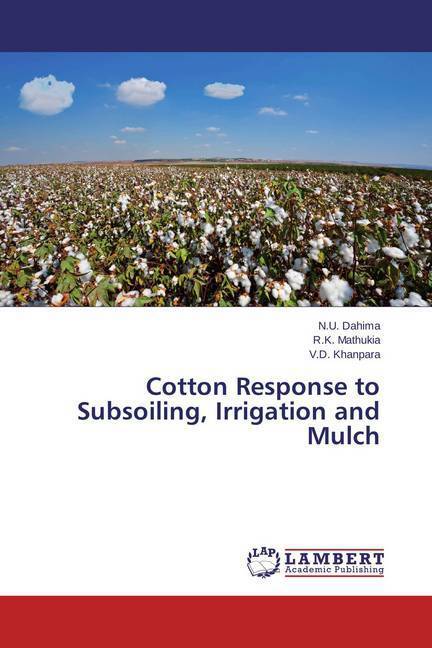
Cotton Response to Subsoiling, Irrigation and Mulch
N. U. Dahima, R. K. Mathukia, V. D. Khanpara
Paperback | Engels
€ 60,95
+ 121 punten
Omschrijving
Cotton is a very important commercial crop for India. It sustains the country's textile industry which is perhaps the largest segment of organized industries in the country. India earns substantial foreign exchange from exports of cotton yarn, thread, fabrics, apparel and made-ups. Rainfed agriculture accounts for more than 70% of cotton cultivation. The characteristic feature of rainfed agriculture id insufficient and erratic rainfall. Subsoiling breaks the hard pan or compact layer present in the profile and helps in sinking down of the rainwater in the lower layer of soil, which helps in better storage of soil moisture. Broad bed and furrow improve infiltration of rainwater and thus helps to improve moisture storage in soil profile. When supply of water is limited, irrigation is applied through alternate furrow. Mulches improve soil water by reducing evaporation losses. To bridge the research gaps highlighted above, the present investigation entitled "Response of cotton (Gossypium hirsutum L.) to subsoiling, land configuration, irrigation and mulch" was undertaken.
Specificaties
Betrokkenen
- Auteur(s):
- Uitgeverij:
Inhoud
- Aantal bladzijden:
- 144
- Taal:
- Engels
Eigenschappen
- Productcode (EAN):
- 9783659793578
- Verschijningsdatum:
- 15/10/2015
- Uitvoering:
- Paperback
- Afmetingen:
- 150 mm x 220 mm
- Gewicht:
- 222 g


Alleen bij Standaard Boekhandel
+ 121 punten op je klantenkaart van Standaard Boekhandel
Cadeau

AANGERADEN


Beoordelingen
We publiceren alleen reviews die voldoen aan de voorwaarden voor reviews. Bekijk onze voorwaarden voor reviews.