


- Afhalen na 1 uur in een winkel met voorraad
- Gratis thuislevering in België vanaf € 30
- Ruim aanbod met 7 miljoen producten
- Afhalen na 1 uur in een winkel met voorraad
- Gratis thuislevering in België vanaf € 30
- Ruim aanbod met 7 miljoen producten





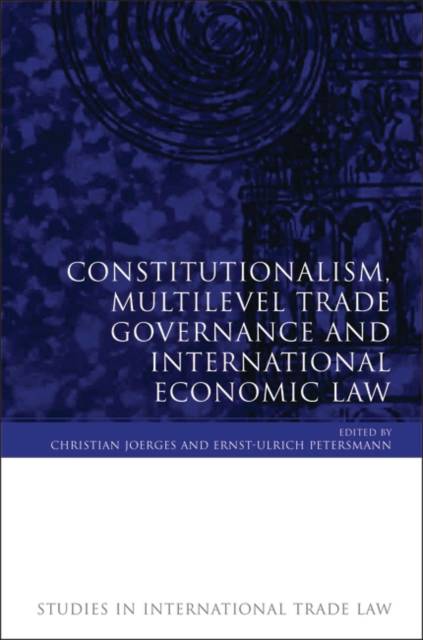
Constitutionalism, Multilevel Trade Governance and International Economic Law (Revised)
Joerges Christian
€ 114,95
+ 229 punten
Omschrijving
This book examines the ever-more-complex legal networks of transnational economic governance structures and their legitimacy problems. Now in a revised paperback edition, it takes up the challenge of the editors' earlier pioneering works, which called for more cross-sectoral and interdisciplinary analyses, to examine the interdependences of multilevel governance in transnational economic, social, environmental, and legal relations. Two complementary strands of theorizing are expounded. One strand argues that globalization and the universal recognition of human rights are transforming the intergovernmental "society of states" into a cosmopolitan community of citizens. This requires more effective constitutional safeguards for protecting human rights and consumer welfare in the national and international governance and legal regulation of international trade. The second strand emphasizes the dependence of the functioning of international markets and liberal trade on governance arrangements, which respond credibly to safety and environmental concerns of consumers, traders, political and non-governmental actors. Enquiries into the generation of international standards and empirical analyses of legalization and judicialization practices form part of this agenda. The perspectives and conclusions of the more than 20 contributors from Europe and North America are diverse. However, they converge in their search for a constitutional architecture which limits, empowers, and legitimizes multilevel trade governance. They also hold a common premise that respect for human rights, private and democratic self-government, and social justice requires more transparent, participatory, and deliberative forms of transnational "cosmopolitan democracy." Now broader in scope and containing new chapters, this book will be helpful for research, as well as classroom teaching and discussion.
Specificaties
Betrokkenen
- Auteur(s):
- Uitgeverij:
Inhoud
- Aantal bladzijden:
- 616
- Taal:
- Engels
- Reeks:
- Reeksnummer:
- nr. 12
Eigenschappen
- Productcode (EAN):
- 9781849461658
- Verschijningsdatum:
- 24/06/2011
- Uitvoering:
- Paperback
- Formaat:
- Trade paperback (VS)
- Afmetingen:
- 156 mm x 234 mm
- Gewicht:
- 857 g


Alleen bij Standaard Boekhandel
+ 229 punten op je klantenkaart van Standaard Boekhandel

Beoordelingen
We publiceren alleen reviews die voldoen aan de voorwaarden voor reviews. Bekijk onze voorwaarden voor reviews.