


- Afhalen na 1 uur in een winkel met voorraad
- Gratis thuislevering in België vanaf € 30
- Ruim aanbod met 7 miljoen producten
- Afhalen na 1 uur in een winkel met voorraad
- Gratis thuislevering in België vanaf € 30
- Ruim aanbod met 7 miljoen producten





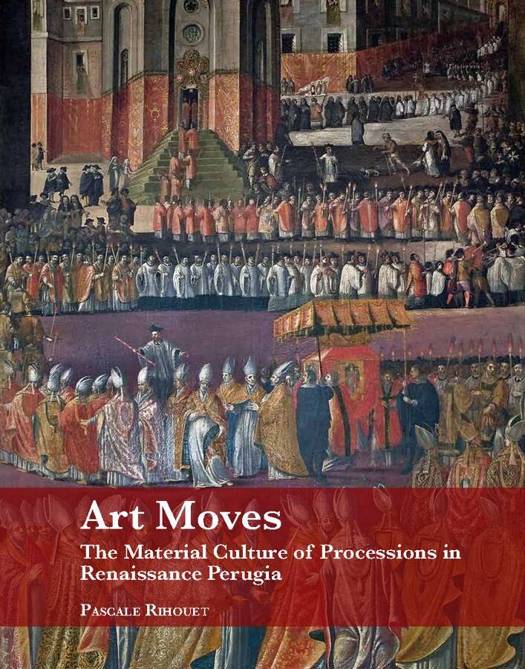
Art Moves. the Material Culture of Processions in Renaissance Perugia
Pascale Rihouet
€ 127,20
+ 254 punten
Omschrijving
"Art Moves" reconstructs the appearance and conditions of use of processional artifacts, whether they were worn (uniforms and liveries), held by individuals, (maces, flags, and candles), or carried communally (canopy, reliquaries, banners, or statues). This is the first book on the material culture of processions as a performative, multi-media, apparatus. It investigates how objects were charged with meaning from medium and fabrication to market value to size and weight. Ritual settings gave them a symbolic force that was heightened through their mobility. In the public events studied here - religious and civic celebrations, elite funerals, papal entries, city-wide penance, and relic transfers - 'moving' [pun intended] objects became the meaningful vehicles of ritual efficacy, shaping ideology, group solidarity, and social cohesion. Despite the liturgical framework, processional paraphernalia foregrounded the laity, notably secular authorities and confraternities. Art Moves also raises the issue of conflict that material ephemera could invite or even spark. Renaissance Perugia, a middling-sized city, presents a wealth of textual, visual, and material evidence, not to mention its medieval and renaissance topography. In Perugia more than anywhere else perhaps, several banners played a key role in crisis processions, becoming cult objects revered into the nineteenth century. This study also revisits artistic representations of corteges, questioning the extent of their documentary value. The approach intertwines the disciplines of art history, social history, material culture, religious studies, and anthropology. This publication offers a new way of looking at the dynamics of urban processions while revivifying the sensory experience of public life in Italy, ca. 1350-1600.
Specificaties
Betrokkenen
- Auteur(s):
- Uitgeverij:
Inhoud
- Aantal bladzijden:
- 323
- Taal:
- Engels
- Reeks:
Eigenschappen
- Productcode (EAN):
- 9781909400832
- Verschijningsdatum:
- 27/06/2019
- Uitvoering:
- Hardcover
- Formaat:
- Genaaid
- Afmetingen:
- 226 mm x 287 mm
- Gewicht:
- 1859 g


Alleen bij Standaard Boekhandel
+ 254 punten op je klantenkaart van Standaard Boekhandel
Cadeau

AANGERADEN


Beoordelingen
We publiceren alleen reviews die voldoen aan de voorwaarden voor reviews. Bekijk onze voorwaarden voor reviews.