


- Afhalen na 1 uur in een winkel met voorraad
- Gratis thuislevering in België vanaf € 30
- Ruim aanbod met 7 miljoen producten
- Afhalen na 1 uur in een winkel met voorraad
- Gratis thuislevering in België vanaf € 30
- Ruim aanbod met 7 miljoen producten





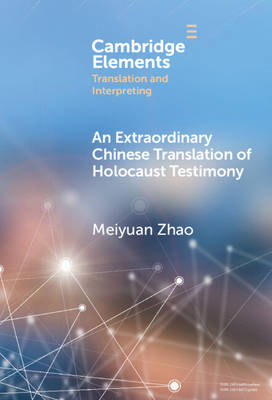
An Extraordinary Chinese Translation of Holocaust Testimony
Meiyuan Zhao
€ 124,45
+ 248 punten
Uitvoering
Omschrijving
This Element focuses on two Holocaust testimonies translated into Chinese by translator, Gao Shan. They deserve attention for the highly unorthodox approach Gao adopted and the substantial alterations he made to the original texts. The study begins by narrating the circumstances that led to these translations, then goes on to explore Gao's views on translation, his style, additions to the original accounts, and the affective dynamics of his translation activity. The author draws on concepts from sociology, memory studies, and sociolinguistics to frame the discussion and highlight the ethical concerns inevitably involved in Gao's work. Without minimizing the moral responsibility of faithful transmission that Holocaust material should always impose, the author wants to show how Gao sometimes sacrifices strict accuracy in his desire to make the survivors' experiences intelligible to a prospective audience wholly unacquainted with the Holocaust.
Specificaties
Betrokkenen
- Auteur(s):
- Uitgeverij:
Inhoud
- Aantal bladzijden:
- 76
- Taal:
- Engels
- Reeks:
Eigenschappen
- Productcode (EAN):
- 9781009549868
- Verschijningsdatum:
- 9/01/2025
- Uitvoering:
- Hardcover
- Formaat:
- Genaaid
- Afmetingen:
- 152 mm x 229 mm
- Gewicht:
- 272 g


Alleen bij Standaard Boekhandel
+ 248 punten op je klantenkaart van Standaard Boekhandel
Cadeau

AANGERADEN


Beoordelingen
We publiceren alleen reviews die voldoen aan de voorwaarden voor reviews. Bekijk onze voorwaarden voor reviews.