


- Afhalen na 1 uur in een winkel met voorraad
- Gratis thuislevering in België vanaf € 30
- Ruim aanbod met 7 miljoen producten
- Afhalen na 1 uur in een winkel met voorraad
- Gratis thuislevering in België vanaf € 30
- Ruim aanbod met 7 miljoen producten





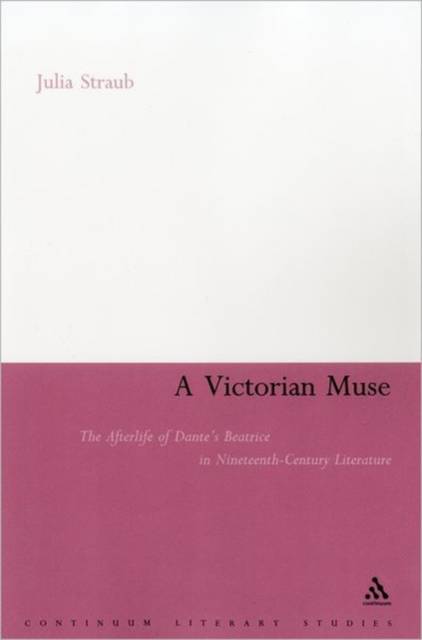
A Victorian Muse
The Afterlife of Dante's Beatrice in Nineteenth-Century Literature
Julia Straub
Paperback | Engels
€ 89,95
+ 179 punten
Uitvoering
Omschrijving
The figure of Dante's Beatrice can be seen as a cultural phenomenon or myth during the nineteenth century, inspiring a wide variety of representations in literature and the visual arts. This study looks at the cultural afterlife of Beatrice in the Victorian period in remarkably different contexts.
Focusing on literary representations and selected examples from the visual arts, this book examines works by Dante Gabriel Rossetti and Christina Rossetti, George Eliot, Alfred Lord Tennyson and Walter Pater as well as by John Ruskin, Maria Rossetti and Arthur Henry Hallam. Julia Straub's analysis shows how the various representations of Beatrice in literature and in the visual arts reflect in meaningful ways some of the central social and aesthetic concerns of the Victorian period, most importantly its discourse on gender.This study offers fascinating insights into the Victorian reception of Dante by exploring the powerful appeal of his muse.
Specificaties
Betrokkenen
- Auteur(s):
- Uitgeverij:
Inhoud
- Aantal bladzijden:
- 192
- Taal:
- Engels
Eigenschappen
- Productcode (EAN):
- 9781441192295
- Verschijningsdatum:
- 5/01/2012
- Uitvoering:
- Paperback
- Formaat:
- Trade paperback (VS)
- Afmetingen:
- 156 mm x 234 mm
- Gewicht:
- 272 g


Alleen bij Standaard Boekhandel
+ 179 punten op je klantenkaart van Standaard Boekhandel
Cadeau

AANGERADEN


Beoordelingen
We publiceren alleen reviews die voldoen aan de voorwaarden voor reviews. Bekijk onze voorwaarden voor reviews.