


- Afhalen na 1 uur in een winkel met voorraad
- Gratis thuislevering in België vanaf € 30
- Ruim aanbod met 7 miljoen producten
- Afhalen na 1 uur in een winkel met voorraad
- Gratis thuislevering in België vanaf € 30
- Ruim aanbod met 7 miljoen producten





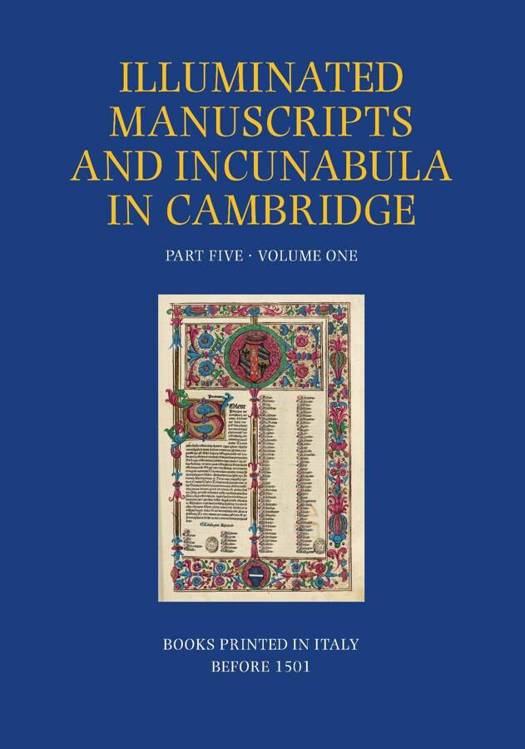
A Catalogue of Western Book Illumination in the Fitzwilliam Museum and the Cambridge Colleges. Part Five
Volume One: Books Printed in Italy Before 1501
Azzurra Elena Andriolo, Suzanne Reynolds
€ 206,70
+ 413 punten
Omschrijving
Incunabula research is flourishing in the twenty-first century. Since the turn of the millennium, printed catalogues of globally important collections have been published and online cataloguing projects have transformed knowledge and access. Nevertheless, the c. 2,000 incunabula in Cambridge outside the University Library remain comparatively unknown. A part of the Cambridge Illuminations Research Project, this catalogue examines books at the Fitzwilliam Museum, and the Cambridge Colleges books that were printed in Italy up to 1500 and have illumination and decoration added by hand. Over the two catalogue volumes, the College material constitutes approximately 75% of the coverage of over 400 individual incunabula in total. These collections are extraordinarily rich, and have been built up over the last 500 years through the patronage of late medieval benefactors and scholars, such as Roger Bower (d. 1507) and Thomas Rotherham (1423-1500), as well as that of classical scholars, and through the bequests of eminent British book collectors and bibliophiles from Archbishops Matthew Parker (1504-1575) and William Sancroft (1617-93), to Samuel Pepys (1633-1703), and John Maynard Keynes (1883-1946). The catalogue focuses on books with decoration intended to ornament rather than to rubricate the text, that include one or more of the following elements: miniatures, woodcuts with contemporary colour added by hand, historiated initials and borders, other types of ornamental initials with or without borders, pen-flourished initials, and a variety of drawings or sketches. In bringing to bear on early printed books the same level of attention to the individual features of particular copies, the editors hope to further erode the artificial barriers between those working on illumination in manuscripts and in printed books, and to offer striking evidence of the inter-meshed worlds of manuscript and print in the second half of the fifteenth century.
Specificaties
Betrokkenen
- Auteur(s):
- Uitgeverij:
Inhoud
- Aantal bladzijden:
- 288
- Taal:
- Engels
- Reeks:
Eigenschappen
- Productcode (EAN):
- 9781909400856
- Verschijningsdatum:
- 18/05/2017
- Uitvoering:
- Hardcover
- Formaat:
- Genaaid
- Afmetingen:
- 239 mm x 330 mm
- Gewicht:
- 1900 g


Alleen bij Standaard Boekhandel
+ 413 punten op je klantenkaart van Standaard Boekhandel
Cadeau

AANGERADEN


Beoordelingen
We publiceren alleen reviews die voldoen aan de voorwaarden voor reviews. Bekijk onze voorwaarden voor reviews.