


- Afhalen na 1 uur in een winkel met voorraad
- Gratis thuislevering in België vanaf € 30
- Ruim aanbod met 7 miljoen producten
- Afhalen na 1 uur in een winkel met voorraad
- Gratis thuislevering in België vanaf € 30
- Ruim aanbod met 7 miljoen producten





Boeken geschreven door Thomas Szasz

-

The Theology of Medicine
Thomas Szasz
- Paperback | Engels
- A collection of essays by Szasz, showing the philosophical foundations he believes are necessary for a society which truly supports freedom and autono... Lees meer
€ 27,95€ 27,95 -
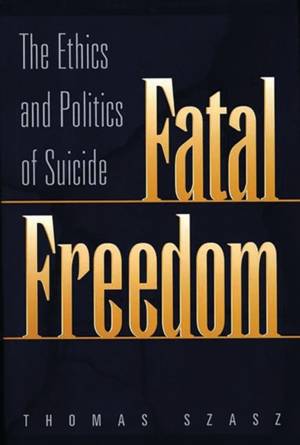
Fatal Freedom
Thomas Szasz
- Hardcover | Engels
- Fatal Freedom is an eloquent defense of every individual's right to choose a voluntary death. The author, a renowned psychiatrist, believes that we ca... Lees meer
€ 135,95€ 135,95 -
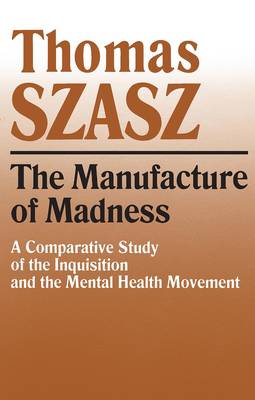
Manufacture of Madness
Thomas Szasz
- Paperback | Engels
- In this seminal work, Dr. Szasz examines the similarities between the inquisition and institutional psychiatry. His purpose is to show "that the belie... Lees meer
€ 27,95€ 27,95 -
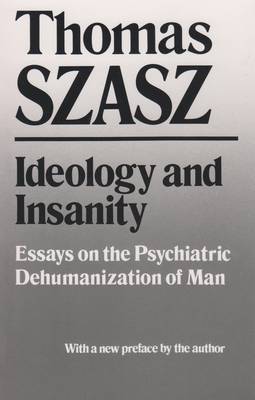
Ideology and Insanity
Thomas Szasz
- Paperback | Engels
- This book is a collection of the earliest essays of Thomas Szasz, in which he staked out his position on "the nature, scope, methods, and values of ps... Lees meer
€ 27,95€ 27,95 -

Faith in Freedom
Thomas Szasz
- Paperback | Engels
- The libertarian philosophy of freedom is characterized by two fundamental beliefs: the right to be left alone and the duty to leave others alone Lees meer
€ 105,45€ 105,45 -
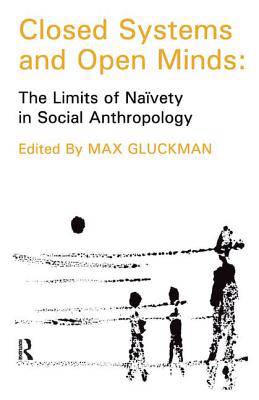
Closed Systems and Open Minds
Thomas Szasz
- Hardcover | Engels
- Social anthropology, defined operationally in terms of what social anthropologists have done in the last fifty years, is the study and comparison of t... Lees meer
€ 358,95€ 358,95 -
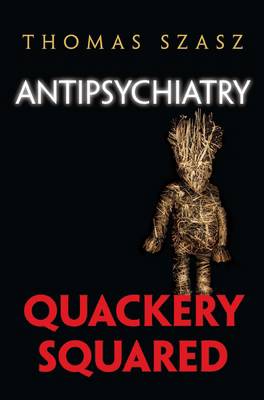
Antipsychiatry
Thomas Szasz
- Hardcover | Engels
- More than fifty years ago, Thomas Szasz showed that the concept of mental illness--a disease of the mind--is an oxymoron, a metaphor, a myth. Disease,... Lees meer
€ 34,95€ 34,95 -

Anti-Freud
Thomas Szasz
- Paperback | Engels
- Karl Kraus was an Austrian writer and satirist who wrote on the abuse of language by psychiatrists, psychoanalysts and journalists. This is an introdu... Lees meer
€ 27,95€ 27,95 -
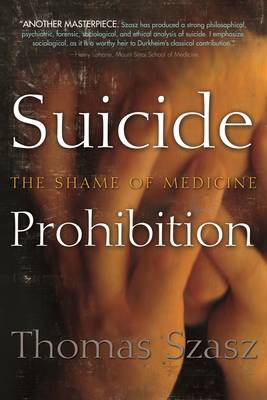
Suicide Prohibition
Thomas Szasz
- Hardcover | Engels
- In Western thought, suicide has evolved from sin to sin-and-crime, to crime, to mental illness, and to semilegal act. A legal act is one we are free t... Lees meer
€ 27,95€ 27,95 -
Pain and Pleasure
Thomas Szasz
- Paperback | Engels
- In this work Dr. Szasz dispels popular and scientific confusion about what pain and pleasure actually are. Demonstrating the doubtful value of such di... Lees meer
€ 27,95€ 27,95 -

Psychiatric Justice
Thomas Szasz
- Paperback | Engels
- Psychiatric Justice explores the intersection of psychiatry and law, arguing that pretrial psychiatric examinations and subsequent hospitalizations of... Lees meer
€ 27,95€ 27,95 -

The Medicalization of Everyday Life
Thomas Szasz
- Paperback | Engels
- This collection of impassioned essays, published between 1973 and 2006, chronicles Thomas Szasz's long campaign against the orthodoxies of "pharmacrac... Lees meer
€ 27,95€ 27,95 -
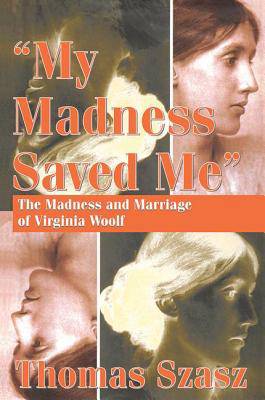
My Madness Saved Me
Thomas Szasz
- Hardcover | Engels
- The vast literature on Virginia Woolf's life, work, and marriage falls into two groups. A large majority is certain that she was mentally ill, and a s... Lees meer
€ 305,45€ 305,45 -
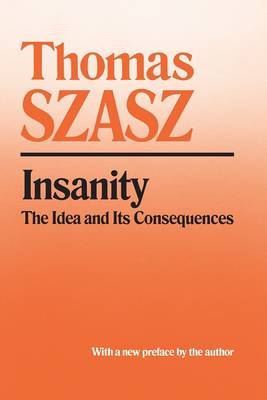
Insanity
Thomas Szasz
- Paperback | Engels
- Is insanity a myth? Does it exist merely to keep psychiatrists in business? In Insanity: The Idea and Its Consequences, Dr. Szasz challenges the way b... Lees meer
€ 27,95€ 27,95 -
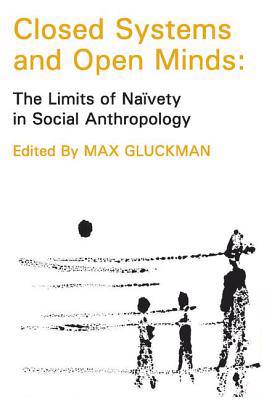
Closed Systems and Open Minds
Thomas Szasz
- Paperback | Engels
- Social anthropology, defined operationally in terms of what social anthropologists have done in the last fifty years, is the study and comparison of t... Lees meer
€ 112,95€ 112,95 -

Schizophrenia
Thomas Szasz
- Paperback | Engels
- Schizophrenia: The Sacred Symbol of Psychiatry examines the concept of schizophrenia and the origins of its classification as a disease. Szasz convinc... Lees meer
€ 27,95€ 27,95 -

Cruel Compassion
Thomas Szasz
- Paperback | Engels
- Cruel Compassion is the capstone of Thomas Szasz's critique of psychiatric practices. Reexamining psychiatric interventions from a cultural-historical... Lees meer
€ 27,95€ 27,95 -
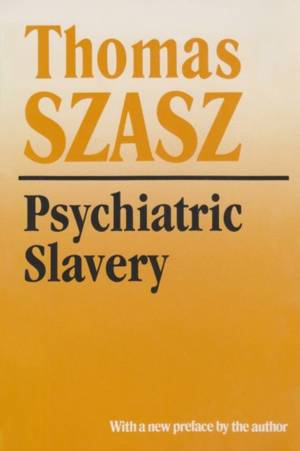
Psychiatric Slavery
Thomas Szasz
- Paperback | Engels
- In Psychiatric Slavery , Dr. Thomas Szasz delivers a powerful indictment of coercive mental health practices and their close ties to the American lega... Lees meer
€ 13,95€ 13,95 -
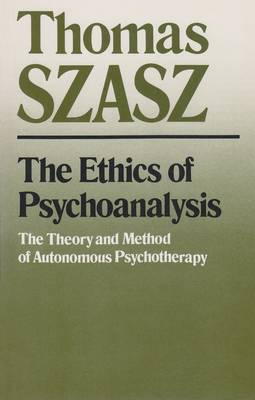
The Ethics of Psychoanalysis
Thomas Szasz
- Paperback | Engels
- In the Ethics of Psychoanalysis , Thomas Szasz describes psychotherapy as a social action, not as healing. Conceived in this way, psychoanalytic treat... Lees meer
€ 23,95€ 23,95 -

Liberation by Oppression
Thomas Szasz
- Paperback | Engels
- Originally called mad-doctoring, psychiatry began in the seventeenth century with the establishing of madhouses and the legal empowering of doctors to... Lees meer
€ 103,95€ 103,95 -
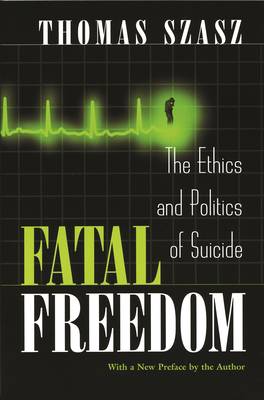
Fatal Freedom
Thomas Szasz
- Paperback | Engels
- Fatal Freedom is an eloquent defense of every individual's right to choose F a voluntary death. By maintaining statutes that determine that voluntary ... Lees meer
€ 27,95€ 27,95 -
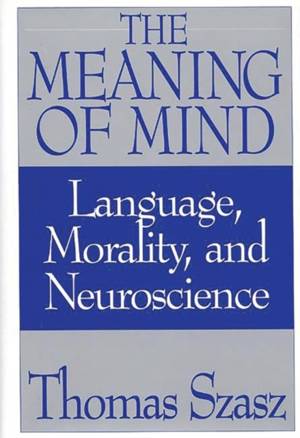
The Meaning of Mind
Thomas Szasz
- Hardcover | Engels
- In this brilliantly original and highly accessible work, Thomas Szasz demonstrates the futility of analyzing the mind as a collection of brain functio... Lees meer
€ 135,95€ 135,95 -
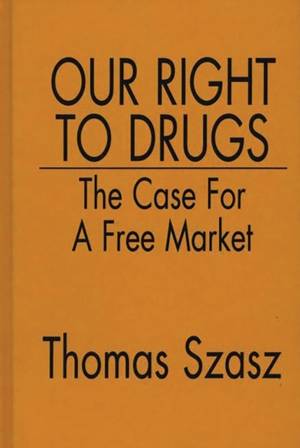
Our Right to Drugs
Thomas Szasz
- Hardcover | Engels
- .In Our Right to Drugs, Thomas Szasz shows that our present drug war started at the beginning of this century, when the American government first assu... Lees meer
€ 135,95€ 135,95 -
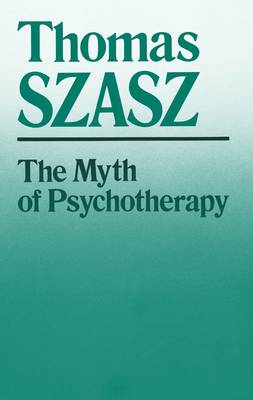
The Myth of Psychotherapy
Thomas Szasz
- Paperback | Engels
- The Myth of Psychotherapy is a provocative critique of psychotherapy and its role in modern society. Szasz contends that mental illness itself is a my... Lees meer
€ 27,95€ 27,95