


- Afhalen na 1 uur in een winkel met voorraad
- Gratis thuislevering in België vanaf € 30
- Ruim aanbod met 7 miljoen producten
- Afhalen na 1 uur in een winkel met voorraad
- Gratis thuislevering in België vanaf € 30
- Ruim aanbod met 7 miljoen producten





€ 59,95
+ 119 punten
Omschrijving
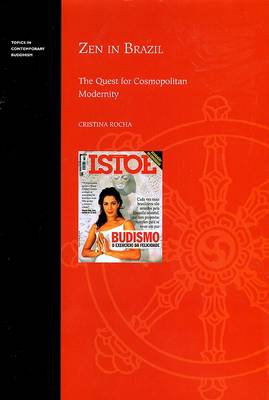
Widely perceived as an overwhelmingly Catholic nation, Brazil has experienced in recent years a growth in the popularity of Buddhism among the urban, cosmopolitan upper classes. In the 1990s Buddhism in general and Zen in particular were adopted by national elites, the media, and popular culture as a set of humanistic values to counter the rampant violence and crime in Brazilian society. Despite national media attention, the rapidly expanding Brazilian market for Buddhist books and events, and general interest in the globalization of Buddhism, the Brazilian case has received little scholarly attention. Cristina Rocha addresses that shortcoming in Zen in Brazil. Drawing on fieldwork in Japan and Brazil, she examines Brazilian history, culture, and literature to uncover the mainly Catholic, Spiritist, and Afro-Brazilian religious matrices responsible for this particular indigenization of Buddhism. In her analysis of Japanese immigration and the adoption and creolization of the Sôtôshû school of Zen Buddhism in Brazil, she offers the fascinating insight that the latter is part of a process of "cannibalizing" the modern other to become modern oneself. She shows, moreover, that in practicing Zen, the Brazilian intellectual elites from the 1950s onward have been driven by a desire to acquire and accumulate cultural capital both locally and overseas. Their consumption of Zen, Rocha contends, has been an expression of their desire to distinguish themselves from popular taste at home while at the same time associating themselves with overseas cultural elites.
Specificaties
Betrokkenen
- Auteur(s):
- Uitgeverij:
Inhoud
- Aantal bladzijden:
- 270
- Taal:
- Engels
- Reeks:
- Reeksnummer:
- nr. 12
Eigenschappen
- Productcode (EAN):
- 9780824829766
- Verschijningsdatum:
- 31/12/2005
- Uitvoering:
- Hardcover
- Formaat:
- Genaaid
- Afmetingen:
- 152 mm x 229 mm
- Gewicht:
- 544 g


Alleen bij Standaard Boekhandel
+ 119 punten op je klantenkaart van Standaard Boekhandel
Cadeau

AANGERADEN


Beoordelingen
We publiceren alleen reviews die voldoen aan de voorwaarden voor reviews. Bekijk onze voorwaarden voor reviews.