


- Afhalen na 1 uur in een winkel met voorraad
- Gratis thuislevering in België vanaf € 30
- Ruim aanbod met 7 miljoen producten
- Afhalen na 1 uur in een winkel met voorraad
- Gratis thuislevering in België vanaf € 30
- Ruim aanbod met 7 miljoen producten





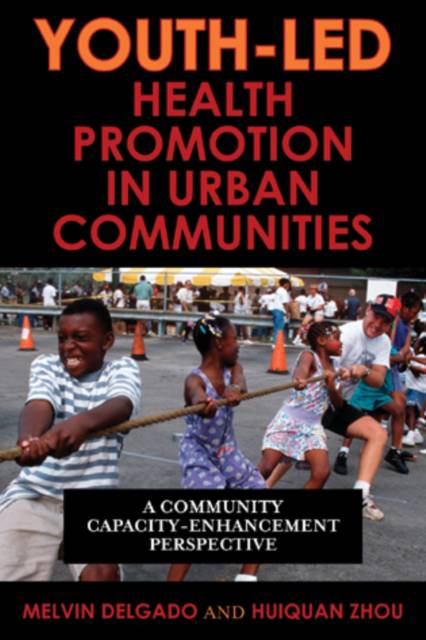
Youth-Led Health Promotion in Urban Communities
A Community Capacity-Enrichment Perspective
Melvin Delgado, Huiquan Zhou
Hardcover | Engels
€ 228,95
+ 457 punten
Uitvoering
Omschrijving
The introduction of innovative social paradigms that stress community-participation, community-focused empowerment, assets, social and economic justice themes, and in the case of youth, civic participation, represents one of the outcomes of this questioning and bodes well for current and future generations. The subject of how best to address the current and future health needs of this country's urban marginalized comunities is one that has also received considerable attention in academic, policy, and practice arenas in the past decade. A variety of models have been put forth to achieve the goal of health in these communities. One of the most promising recommendations has been the use of health promotion as a vehicle for reaching and empowering communities of color in both rural and urban America. The youth-led environmental justice movement, as it will be addressed in various sections of this book, is one of the latest and most promising approaches towards health promotion that is grass-roots and community participatory based. Youth-led health promotion represents an emerging field with tremendous implications for addressing the health needs of marginalized urban youth of color in the United States.
Specificaties
Betrokkenen
- Auteur(s):
- Uitgeverij:
Inhoud
- Aantal bladzijden:
- 288
- Taal:
- Engels
Eigenschappen
- Productcode (EAN):
- 9780742561137
- Verschijningsdatum:
- 28/02/2008
- Uitvoering:
- Hardcover
- Formaat:
- Genaaid
- Afmetingen:
- 152 mm x 229 mm
- Gewicht:
- 585 g


Alleen bij Standaard Boekhandel
+ 457 punten op je klantenkaart van Standaard Boekhandel
Cadeau

AANGERADEN


Beoordelingen
We publiceren alleen reviews die voldoen aan de voorwaarden voor reviews. Bekijk onze voorwaarden voor reviews.