


- Afhalen na 1 uur in een winkel met voorraad
- Gratis thuislevering in België vanaf € 30
- Ruim aanbod met 7 miljoen producten
- Afhalen na 1 uur in een winkel met voorraad
- Gratis thuislevering in België vanaf € 30
- Ruim aanbod met 7 miljoen producten





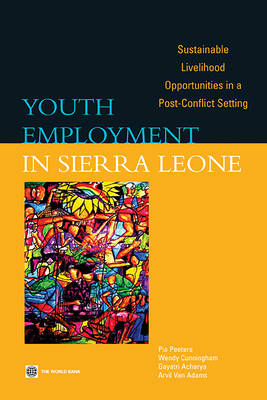
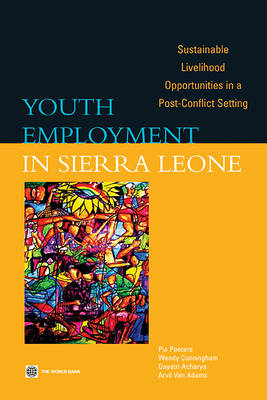
Youth Employment in Sierra Leone
Sustainable Livelihood Opportunities in a Post-Conflict Setting
Pia Peeters, Wendy Cunningham, Gayatri Acharya
Paperback | Engels
€ 42,45
+ 84 punten
Omschrijving
Creating job opportunities for its large and growing number of young people, is a key development challenge for the government of Sierra Leone. It is also crucial for maintaining peace and promoting pro-poor growth. Young people ages 15 to 35 years old are at a particular disadvantage relative to today's children or adults, as they grew up during a war, thereby potentially stunting their development and their transition into adulthood. This transition culminates with secure employment and the resources to provide for oneself and one's family. History suggests that marginalized young people can disrupt a peaceful society; youth who lacked education and access to job opportunities were at the core of the recent conflict, and it is important that this cycle not be repeated. The challenge is how to support their transition to adulthood and, in the process, avoid future conflict. 'Youth Employment in Sierra Leone' examines the supply and demand sides of the labor market to better understand the situation of today's young people, relative to that of adults, and presents an evidence-based menu of potential programs and policies for Sierra Leone. In particular, the authors use a recent household survey and census data to examine patterns of formal and informal labor force activity and human capital accumulation. The authors commissioned a labor demand survey and report on its findings to determine the extent to which urban and rural employers hire young people and their decision-making process. The study reviews skill development programs to enhance youth employability, based on a review of international best practices and of the main programs in Sierra Leone. The authors conclude that youth are a dynamic part of the labor market and that the observed youth employment patterns are a result of the economy's structure rather than constraints facing youth. Short-term actions-to address the immediate needs of today's youth-and long-term strategies to improve the labor market's underlying limitations will be of interest to policy makers who are looking to turn the serious political, social, and economic challenges of sustainable youth employment into an opportunity.
Specificaties
Betrokkenen
- Auteur(s):
- Uitgeverij:
Inhoud
- Aantal bladzijden:
- 200
- Taal:
- Engels
Eigenschappen
- Productcode (EAN):
- 9780821378229
- Verschijningsdatum:
- 2/03/2009
- Uitvoering:
- Paperback
- Formaat:
- Trade paperback (VS)
- Afmetingen:
- 150 mm x 226 mm
- Gewicht:
- 317 g


Alleen bij Standaard Boekhandel
+ 84 punten op je klantenkaart van Standaard Boekhandel
AANGERADEN


Beoordelingen
We publiceren alleen reviews die voldoen aan de voorwaarden voor reviews. Bekijk onze voorwaarden voor reviews.