


- Afhalen na 1 uur in een winkel met voorraad
- Gratis thuislevering in België vanaf € 30
- Ruim aanbod met 7 miljoen producten
- Afhalen na 1 uur in een winkel met voorraad
- Gratis thuislevering in België vanaf € 30
- Ruim aanbod met 7 miljoen producten





€ 70,45
+ 140 punten
Omschrijving
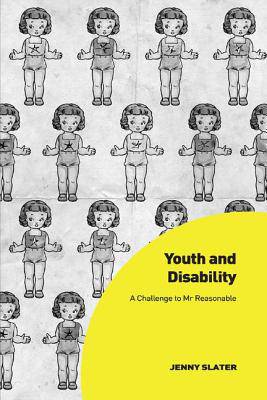
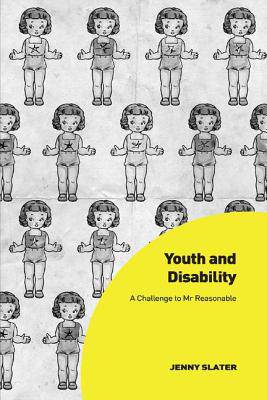
In this ground-breaking book, Jenny Slater uses the lens of 'the reasonable' to explore how normative understandings of youth, dis/ability and the intersecting identities of gender and sexuality impact upon the lives of young dis/abled people. Although youth and disability have separately been thought within socio-cultural frameworks, rarely have sociological studies of 'youth' and 'disability' been brought together. By taking an interdisciplinary, critical disability studies approach to explore the socio-cultural concepts of 'youth' and 'disability' alongside one-another, Slater convincingly demonstrates that 'youth' and 'disability' have been conceptualised within medical/psychological frameworks for too long. With chapters focusing on access and youth culture, independence, autonomy and disabled people's movements, and the body, gender and sexuality, this volume's intersectional and transdisciplinary engagement with social theory offers a significant contribution to existing theoretical and empirical literature and knowledges around disability and youth. Indeed, through highlighting the ableism of adulthood and the falsity of conceptualising youth as a time of becoming-independent-adult, the need to shift approaches to research around dis/abled youth is one of the main themes of the book. This book therefore is a provocation to rethink what is implicit about 'youth' and 'disability'. Moreover, through such an endeavour, this book sits as a challenge to Mr Reasonable.
Specificaties
Betrokkenen
- Auteur(s):
- Uitgeverij:
Inhoud
- Aantal bladzijden:
- 166
- Taal:
- Engels
- Reeks:
Eigenschappen
- Productcode (EAN):
- 9780815392163
- Verschijningsdatum:
- 22/11/2017
- Uitvoering:
- Paperback
- Formaat:
- Trade paperback (VS)
- Afmetingen:
- 150 mm x 231 mm
- Gewicht:
- 258 g


Alleen bij Standaard Boekhandel
+ 140 punten op je klantenkaart van Standaard Boekhandel
Cadeau

AANGERADEN


Beoordelingen
We publiceren alleen reviews die voldoen aan de voorwaarden voor reviews. Bekijk onze voorwaarden voor reviews.