


- Afhalen na 1 uur in een winkel met voorraad
- Gratis thuislevering in België vanaf € 30
- Ruim aanbod met 7 miljoen producten
- Afhalen na 1 uur in een winkel met voorraad
- Gratis thuislevering in België vanaf € 30
- Ruim aanbod met 7 miljoen producten





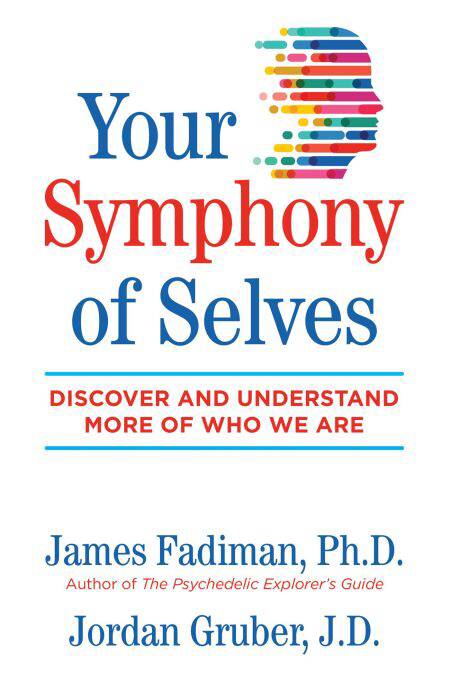
Your Symphony of Selves E-BOOK
Discover and Understand More of Who We Are
James Fadiman, Jordan Gruber
E-book | Engels
€ 15,65
+ 15 punten
Uitvoering
Omschrijving
Why you are a different you at different times and how that’s both normal and healthy
• Reveals that each of us is made up of multiple selves, any of which can come to the forefront in different situations
• Offers examples of healthy multiple selves from psychology, neuroscience, pop culture, literature, and ancient cultures and traditions
• Explores how to harmonize our selves and learn to access whichever one is best for a given situation
Offering groundbreaking insight into the dynamic nature of personality, James Fadiman and Jordan Gruber show that each of us is comprised of distinct, autonomous, and inherently valuable “selves.” They also show that honoring each of these selves is a key to improved ways of living, loving, and working.
Explaining that it is normal to have multiple selves, the authors offer insights into why we all are inconsistent at times, allowing us to become more accepting of the different parts of who we and other people are. They explore, through extensive reviews, how the concept of healthy multiple selves has been supported in science, popular culture, spirituality, philosophy, art, literature, and ancient traditions and cite well-known people, including David Bowie and Beyoncé, who describe accessing another self at a pivotal point in their lives to resolve a pressing challenge.
Instead of seeing the existence of many selves as a flaw or pathology, the authors reveal that the healthiest people, mentally and emotionally, are those that have naturally learned to appreciate and work in harmony with their own symphony of selves. They identify “the Single Self Assumption” as the prime reason why the benefits of having multiple selves has been ignored. This assumption holds that we each are or ought to be a single consistent self, yet we all recognize, in reality, that we are different in different situations.
Offering a pragmatic approach, the authors show how you can prepare for situations by shifting to the appropriate self, rather than being “switched” or “triggered” into a sub-optimal part of who you are. They also show how recognizing your selves provides increased access to skills, talent, and creativity; enhanced energy; and improved healing and pain management. Appreciating your diverse selves will give you more empathy toward yourself and others. By harmonizing your symphony of selves, you can learn to be “in the right mind at the right time” more often.
• Reveals that each of us is made up of multiple selves, any of which can come to the forefront in different situations
• Offers examples of healthy multiple selves from psychology, neuroscience, pop culture, literature, and ancient cultures and traditions
• Explores how to harmonize our selves and learn to access whichever one is best for a given situation
Offering groundbreaking insight into the dynamic nature of personality, James Fadiman and Jordan Gruber show that each of us is comprised of distinct, autonomous, and inherently valuable “selves.” They also show that honoring each of these selves is a key to improved ways of living, loving, and working.
Explaining that it is normal to have multiple selves, the authors offer insights into why we all are inconsistent at times, allowing us to become more accepting of the different parts of who we and other people are. They explore, through extensive reviews, how the concept of healthy multiple selves has been supported in science, popular culture, spirituality, philosophy, art, literature, and ancient traditions and cite well-known people, including David Bowie and Beyoncé, who describe accessing another self at a pivotal point in their lives to resolve a pressing challenge.
Instead of seeing the existence of many selves as a flaw or pathology, the authors reveal that the healthiest people, mentally and emotionally, are those that have naturally learned to appreciate and work in harmony with their own symphony of selves. They identify “the Single Self Assumption” as the prime reason why the benefits of having multiple selves has been ignored. This assumption holds that we each are or ought to be a single consistent self, yet we all recognize, in reality, that we are different in different situations.
Offering a pragmatic approach, the authors show how you can prepare for situations by shifting to the appropriate self, rather than being “switched” or “triggered” into a sub-optimal part of who you are. They also show how recognizing your selves provides increased access to skills, talent, and creativity; enhanced energy; and improved healing and pain management. Appreciating your diverse selves will give you more empathy toward yourself and others. By harmonizing your symphony of selves, you can learn to be “in the right mind at the right time” more often.
Specificaties
Betrokkenen
- Auteur(s):
- Uitgeverij:
Inhoud
- Aantal bladzijden:
- 448
- Taal:
- Engels
Eigenschappen
- Productcode (EAN):
- 9781644110270
- Verschijningsdatum:
- 03/08/2020
- Uitvoering:
- E-book
- Beveiligd met:
- Adobe DRM
- Formaat:
- ePub


Alleen bij Standaard Boekhandel
+ 15 punten op je klantenkaart van Standaard Boekhandel
AANGERADEN


Beoordelingen
We publiceren alleen reviews die voldoen aan de voorwaarden voor reviews. Bekijk onze voorwaarden voor reviews.