


- Afhalen na 1 uur in een winkel met voorraad
- Gratis thuislevering in België vanaf € 30
- Ruim aanbod met 7 miljoen producten
- Afhalen na 1 uur in een winkel met voorraad
- Gratis thuislevering in België vanaf € 30
- Ruim aanbod met 7 miljoen producten





€ 129,95
+ 259 punten
Omschrijving
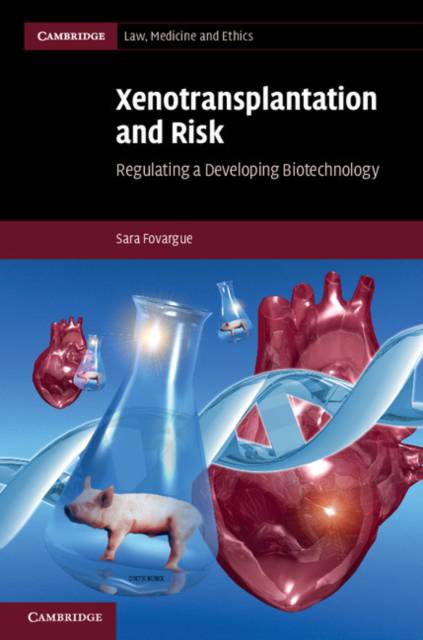
Some developing biotechnologies challenge accepted legal and ethical norms because of the risks they pose. Xenotransplantation (cross-species transplantation) may prolong life but may also harm the xeno-recipient and the public due to its potential to transmit infectious diseases. These trans-boundary diseases emphasise the global nature of advances in health care and highlight the difficulties of identifying, monitoring and regulating such risks and thereby protecting individual and public health. Xenotransplantation raises questions about how uncertainty and risk are understood and accepted, and exposes tensions between private benefit and public health. Where public health is at risk, a precautionary approach informed by the harm principle supports prioritising the latter, but the issues raised by genetically engineered solid organ xenotransplants have not, as yet, been sufficiently discussed. This must occur prior to their clinical introduction because of the necessary changes to accepted norms which are needed to appropriately safeguard individual and public health.
Specificaties
Betrokkenen
- Auteur(s):
- Uitgeverij:
Inhoud
- Aantal bladzijden:
- 306
- Taal:
- Engels
- Reeks:
- Reeksnummer:
- nr. 14
Eigenschappen
- Productcode (EAN):
- 9780521195768
- Verschijningsdatum:
- 17/11/2011
- Uitvoering:
- Hardcover
- Formaat:
- Genaaid
- Afmetingen:
- 152 mm x 229 mm
- Gewicht:
- 612 g


Alleen bij Standaard Boekhandel
+ 259 punten op je klantenkaart van Standaard Boekhandel
Cadeau

AANGERADEN


Beoordelingen
We publiceren alleen reviews die voldoen aan de voorwaarden voor reviews. Bekijk onze voorwaarden voor reviews.