


- Afhalen na 1 uur in een winkel met voorraad
- Gratis thuislevering in België vanaf € 30
- Ruim aanbod met 7 miljoen producten
- Afhalen na 1 uur in een winkel met voorraad
- Gratis thuislevering in België vanaf € 30
- Ruim aanbod met 7 miljoen producten





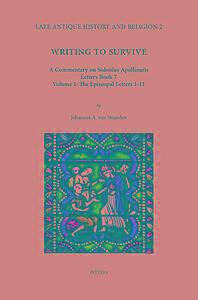
Writing to Survive. a Commentary on Sidonius Apollinaris, Letters Book 7. Volume 1
The Episcopal Letters 1-11
Ja Van Waarden
€ 85,00
+ 170 punten
Omschrijving
A key figure in late antique Gaul, Sidonius Apollinaris - aristocrat, administrator, poet, letter-writer, and bishop - is still insufficiently understood. This study aims to contribute to an up-to-date appreciation, both by incorporating recent research and by breaking new ground. It is a philological and historical commentary with many of the qualities of a monograph. Focusing on eleven letters written by Sidonius to his fellow bishops, one of which contains the only surviving example of Sidonius' prose oratory, it fills an important gap in the critical coverage of his literary production. A lengthy introduction situates the letters within Sidonius' life and works, the politics of the last years of the Roman empire in the west, and the traditions of late antique epistolography. Use is made throughout of modern research in linguistics, and a fresh hypothesis on the rendering of 'you' and 'I' in Sidonius' correspondence is proposed. The book offers a reappraisal of late antique stylistic 'mannerism' as 'community art' which gives preference to the socially unifying function of art over its individual creative potential. This is a work which will be of interest to classicists and medievalists, to literary scholars and church historians, to those concerned with philological and historical intricacies and those interested in the broader development of literature and mentalities in Late Antiquity.
Specificaties
Betrokkenen
- Auteur(s):
- Uitgeverij:
Inhoud
- Aantal bladzijden:
- 659
- Taal:
- Engels
- Reeks:
- Reeksnummer:
- nr. 2
Eigenschappen
- Productcode (EAN):
- 9789042923201
- Verschijningsdatum:
- 31/12/2010
- Uitvoering:
- Hardcover
- Formaat:
- Genaaid
- Afmetingen:
- 175 mm x 249 mm
- Gewicht:
- 1474 g


Alleen bij Standaard Boekhandel
+ 170 punten op je klantenkaart van Standaard Boekhandel
Cadeau

AANGERADEN


Beoordelingen
We publiceren alleen reviews die voldoen aan de voorwaarden voor reviews. Bekijk onze voorwaarden voor reviews.