


- Afhalen na 1 uur in een winkel met voorraad
- Gratis thuislevering in België vanaf € 30
- Ruim aanbod met 7 miljoen producten
- Afhalen na 1 uur in een winkel met voorraad
- Gratis thuislevering in België vanaf € 30
- Ruim aanbod met 7 miljoen producten





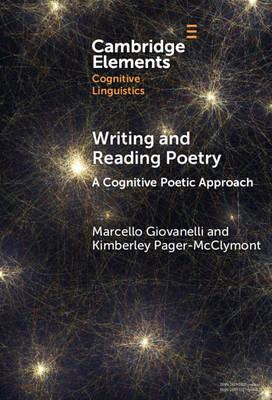
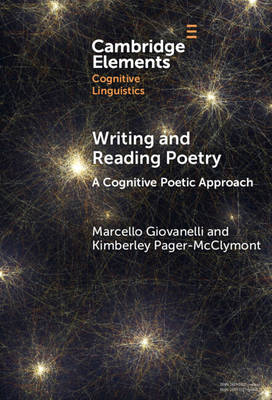
Writing and Reading Poetry
A Cognitive Poetic Approach
Marcello Giovanelli, Kimberley Pager-McClymont
€ 124,45
+ 248 punten
Uitvoering
Omschrijving
This Element explores the relationship between creativity, poetry, and cognition through the lenses of cognitive linguistics and cognitive poetics. Section 1 situates poetic creativity within the frameworks of conceptual metaphor theory, cognitive grammar, and text world theory, reconsidering traditional views of creativity by showing how linguistic structures underpin both writing and reading poetry. Section 2 adopts an autoethnographic approach, documenting the writing of poems, demonstrating how cognitive-poetic principles shape decisions and highlight the embodied, subjective nature of creativity. Section 3 shifts focus to analysis, applying stylistic frameworks to original poems to illustrate how linguistic methods illuminate textual patterns, conceptual structures, and interpretative effects. Section 4 turns to reception, examining empirical reader-response data to show how readers engage with poems through cognitive-poetic processes, creating a cyclical interplay between production, analysis, and response. Together, these sections highlight the value of cognitive linguistics for understanding poetic creativity, interpretation, and experience.
Specificaties
Betrokkenen
- Auteur(s):
- Uitgeverij:
Inhoud
- Aantal bladzijden:
- 84
- Taal:
- Engels
- Reeks:
Eigenschappen
- Productcode (EAN):
- 9781009498593
- Verschijningsdatum:
- 23/04/2026
- Uitvoering:
- Hardcover
- Formaat:
- Genaaid
- Afmetingen:
- 152 mm x 229 mm
- Gewicht:
- 285 g


Alleen bij Standaard Boekhandel
+ 248 punten op je klantenkaart van Standaard Boekhandel
Cadeau

AANGERADEN


Beoordelingen
We publiceren alleen reviews die voldoen aan de voorwaarden voor reviews. Bekijk onze voorwaarden voor reviews.