


- Afhalen na 1 uur in een winkel met voorraad
- Gratis thuislevering in België vanaf € 30
- Ruim aanbod met 7 miljoen producten
- Afhalen na 1 uur in een winkel met voorraad
- Gratis thuislevering in België vanaf € 30
- Ruim aanbod met 7 miljoen producten





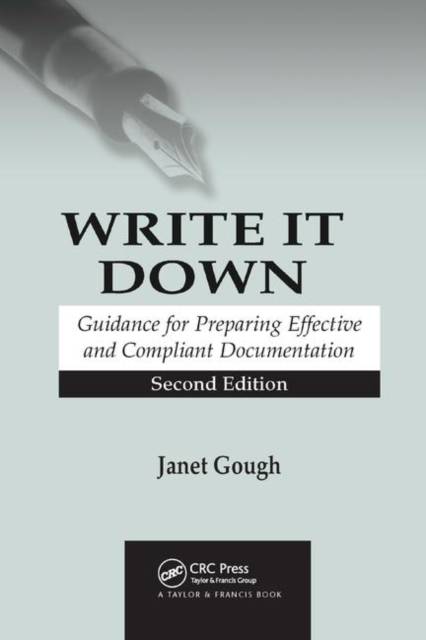
Write It Down
Guidance for Preparing Effective and Compliant Documentation
Janet Gough
Paperback | Engels
€ 137,45
+ 274 punten
Uitvoering
Omschrijving
This book covers writing for the FDA as it applies to the pharmaceutical industry. It presents a brief overview of the regulatory environment and documentation requirements, identifies the roles of writers and readers, and discusses the purpose of good documentation. The book offers documents and representative writing samples from throughout the industry, ranging from the laboratory to Quality Assurance to manufacturing and regulatory affairs. It provides writers with the tools they need to complete writing tasks effectively. This new edition includes examples of various forms of representation of data and other illustrative materials that accompany documents needed by the FDA.
Specificaties
Betrokkenen
- Auteur(s):
- Uitgeverij:
Inhoud
- Aantal bladzijden:
- 504
- Taal:
- Engels
Eigenschappen
- Productcode (EAN):
- 9780367393137
- Verschijningsdatum:
- 19/09/2019
- Uitvoering:
- Paperback
- Formaat:
- Trade paperback (VS)
- Afmetingen:
- 155 mm x 231 mm
- Gewicht:
- 589 g


Alleen bij Standaard Boekhandel
+ 274 punten op je klantenkaart van Standaard Boekhandel
Cadeau

AANGERADEN


Beoordelingen
We publiceren alleen reviews die voldoen aan de voorwaarden voor reviews. Bekijk onze voorwaarden voor reviews.