


- Afhalen na 1 uur in een winkel met voorraad
- Gratis thuislevering in België vanaf € 30
- Ruim aanbod met 7 miljoen producten
- Afhalen na 1 uur in een winkel met voorraad
- Gratis thuislevering in België vanaf € 30
- Ruim aanbod met 7 miljoen producten





€ 99,95
+ 199 punten
Omschrijving
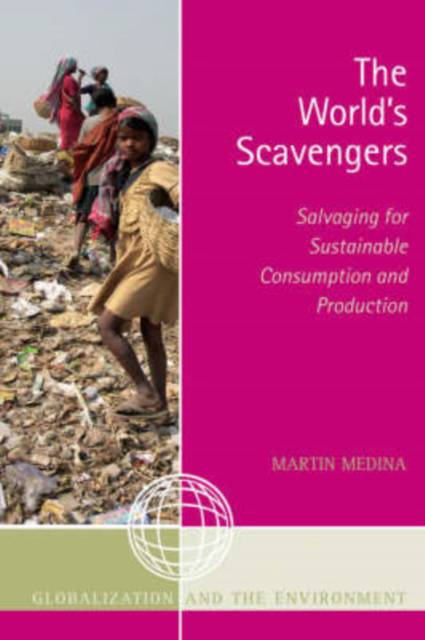
Medina tells us that up to 2% of the urban population in developing countries survives by salvaging materials from waste for recycling, which represents up to 64 million scavengers in the world today. Despite these numbers, we know little about the impact of scavenging on global capitalism development. The author examines its historical evolution and its linkages with formal and informal sector productive activities in capitalist and non-capitalist societies, in case studies from Mexico, Brazil, Colombia, Argentina, Egypt, the Philippines, and India. His new book radically alters popular perceptions on scavenging, demonstrating that many widely-held beliefs are wrong: scavenging is not primarily the activity of the poor nor is it a strictly marginal activity; the economic impact of scavenging is significant and can increase industrial competitiveness; and scavenging can be compatible with a sustainable waste management system. Scavenging represents an adaptive response to poverty, yet at the same time it can be a resource to cities, whose contributions should be recognized and understood.
Specificaties
Betrokkenen
- Auteur(s):
- Uitgeverij:
Inhoud
- Aantal bladzijden:
- 318
- Taal:
- Engels
- Reeks:
Eigenschappen
- Productcode (EAN):
- 9780759109414
- Verschijningsdatum:
- 3/05/2007
- Uitvoering:
- Paperback
- Formaat:
- Trade paperback (VS)
- Afmetingen:
- 153 mm x 224 mm
- Gewicht:
- 508 g


Alleen bij Standaard Boekhandel
+ 199 punten op je klantenkaart van Standaard Boekhandel
Cadeau

AANGERADEN


Beoordelingen
We publiceren alleen reviews die voldoen aan de voorwaarden voor reviews. Bekijk onze voorwaarden voor reviews.