


- Afhalen na 1 uur in een winkel met voorraad
- Gratis thuislevering in België vanaf € 30
- Ruim aanbod met 7 miljoen producten
- Afhalen na 1 uur in een winkel met voorraad
- Gratis thuislevering in België vanaf € 30
- Ruim aanbod met 7 miljoen producten





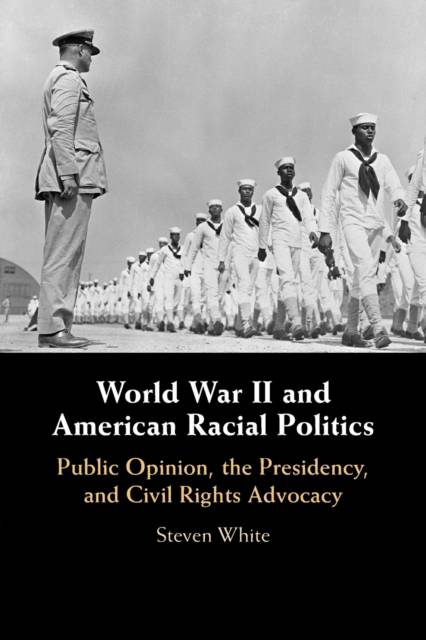
World War II and American Racial Politics
Public Opinion, the Presidency, and Civil Rights Advocacy
Steven White
Paperback | Engels
€ 64,95
+ 129 punten
Uitvoering
Omschrijving
World War II played an important role in the trajectory of race and American political development, but the War's effects were much more complex than many assume. Steven White offers an extensive analysis of rarely utilized survey data and archival evidence to assess white racial attitudes and the executive branch response to civil rights advocacy. He finds that, contrary to conventional wisdom, the white mass public's racial policy attitudes largely did not liberalize during the war against Nazi Germany. In this context, advocates turned their attention to the possibility of unilateral action by the president, emphasizing a wartime civil rights agenda focused on discrimination in the defense industry and segregation in the military. This book offers a reinterpretation of this critical period in American political development, as well as implications for the theoretical relationship between war and the inclusion of marginalized groups in democratic societies.
Specificaties
Betrokkenen
- Auteur(s):
- Uitgeverij:
Inhoud
- Aantal bladzijden:
- 218
- Taal:
- Engels
Eigenschappen
- Productcode (EAN):
- 9781108446648
- Verschijningsdatum:
- 2/12/2021
- Uitvoering:
- Paperback
- Formaat:
- Trade paperback (VS)
- Afmetingen:
- 152 mm x 229 mm
- Gewicht:
- 299 g


Alleen bij Standaard Boekhandel
+ 129 punten op je klantenkaart van Standaard Boekhandel

Beoordelingen
We publiceren alleen reviews die voldoen aan de voorwaarden voor reviews. Bekijk onze voorwaarden voor reviews.