


- Afhalen na 1 uur in een winkel met voorraad
- Gratis thuislevering in België vanaf € 30
- Ruim aanbod met 7 miljoen producten
- Afhalen na 1 uur in een winkel met voorraad
- Gratis thuislevering in België vanaf € 30
- Ruim aanbod met 7 miljoen producten





€ 48,45
+ 96 punten
Uitvoering
Omschrijving
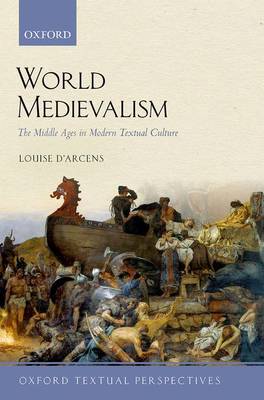
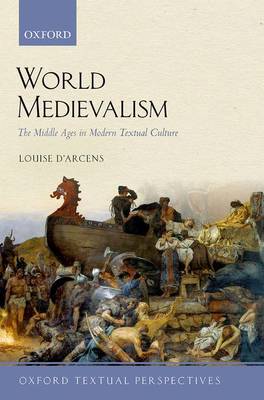
World Medievalism: The Middle Ages in Modern Textual Culture explores the ways in which a range of modern textual cultures have continued to engage creatively with the medieval past in order to come to terms with the global present. Building its argument through four case studies--from the Middle East, France, Southeast Asia, and Indigenous Australia--it shows that to understand medievalism as a cultural idiom with global reach, we need to develop a more nuanced grasp of the different ways 'the Middle Ages' have come to signify beyond Europe as well as within a Europe that has been transformed by multiculturalism and the global economy. The book's case studies are explored within a conceptual framework in which medievalism itself is formulated as 'world-disclosing' a transhistorical encounter that enables the modern subject to apprehend the past 'world' opened up in medieval and medievalist texts and objects. The book analyses the cultural and material conditions under which its texts are produced, disseminated, and received, and examines literature alongside films, television programs, newspapers and journals, political tracts, as well as such material and artefactual texts as photographs, paintings, statues, buildings, rock art, and fossils. While the case studies feature distinctive localised forms of medievalism, taken together they reveal how imperial and global legacies have ensured that the medieval period continues to be perceived as a commonly held past that can be retrieved, reclaimed, or revived in response to the accelerated changes and uncertainties of global modernity.
Specificaties
Betrokkenen
- Auteur(s):
- Uitgeverij:
Inhoud
- Aantal bladzijden:
- 218
- Taal:
- Engels
- Reeks:
Eigenschappen
- Productcode (EAN):
- 9780198825951
- Verschijningsdatum:
- 25/02/2022
- Uitvoering:
- Paperback
- Formaat:
- Trade paperback (VS)
- Afmetingen:
- 130 mm x 198 mm
- Gewicht:
- 249 g


Alleen bij Standaard Boekhandel
+ 96 punten op je klantenkaart van Standaard Boekhandel
Cadeau

AANGERADEN


Beoordelingen
We publiceren alleen reviews die voldoen aan de voorwaarden voor reviews. Bekijk onze voorwaarden voor reviews.