


- Afhalen na 1 uur in een winkel met voorraad
- Gratis thuislevering in België vanaf € 30
- Ruim aanbod met 7 miljoen producten
- Afhalen na 1 uur in een winkel met voorraad
- Gratis thuislevering in België vanaf € 30
- Ruim aanbod met 7 miljoen producten





€ 169,95
+ 339 punten
Omschrijving
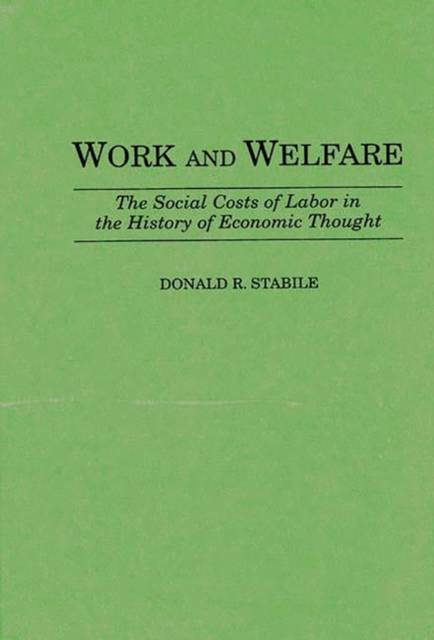
This interesting work presents a unique perspective on the history of economic thought by showing that classical economists from Adam Smith to Alfred Marshall had sympathy for workers - for example, the theory of the subsistence wage echoed the theological call for a just wage that existed in the middle ages. It also describes how these thinkers promoted either a set of social obligations or a form of social insurance to assist workers. These economic thinkers of the past argued that a subsistence standard of living was important to maintain and improve workers' efficiency and to raise healthy families. The notion that these writers had an undeveloped theory of social costs that they applied to labor should appeal to economists and others concerned with the plight of workers as the modern economy restructures itself.
Specificaties
Betrokkenen
- Auteur(s):
- Uitgeverij:
Inhoud
- Aantal bladzijden:
- 240
- Taal:
- Engels
- Reeks:
Eigenschappen
- Productcode (EAN):
- 9780313297380
- Verschijningsdatum:
- 6/02/1996
- Uitvoering:
- Hardcover
- Formaat:
- Genaaid
- Afmetingen:
- 156 mm x 234 mm
- Gewicht:
- 512 g


Alleen bij Standaard Boekhandel
+ 339 punten op je klantenkaart van Standaard Boekhandel
Cadeau

AANGERADEN


Beoordelingen
We publiceren alleen reviews die voldoen aan de voorwaarden voor reviews. Bekijk onze voorwaarden voor reviews.