


- Afhalen na 1 uur in een winkel met voorraad
- Gratis thuislevering in België vanaf € 30
- Ruim aanbod met 7 miljoen producten
- Afhalen na 1 uur in een winkel met voorraad
- Gratis thuislevering in België vanaf € 30
- Ruim aanbod met 7 miljoen producten





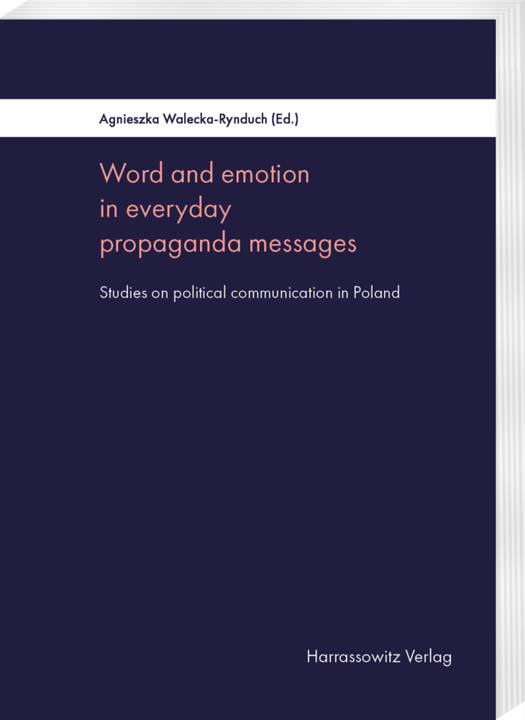
Word and Emotion in Everyday Propaganda Messages
Studies on Political Communication in Poland
Agnieszka Walecka-Rynduch
Paperback | Engels
€ 38,45
+ 76 punten
Eenvoudig bestellen
Veilig betalen


Gratis thuislevering vanaf € 30 (via bpost)
Gratis levering in je Standaard Boekhandel
Omschrijving
Propaganda as a concept and practice continues to arouse both emotions and research interest. It is difficult to destincly define propaganda messages, because they are essentially multimodal in nature and represent a variety of methods and media employed to inculcate desired content upon people. A "group mind" and stereotypical thinking play an important role in this. Researchers argue that propaganda influences audiences by shaping mental images of the world aimed to manipulate public opinion, creating a new nomenclature, new tools of influence and new interpretations of ideas. The 10 contributions focus on selected historical and current processes in Poland to show, how one of the main objectives of this type of public persuasion was and is achieved: to persuade as many people as possible to adopt the attitude promoted by the sender of the message. They present various approaches (e.g. new linguistics of propaganda, analysis of visual messages) and multiple aspects of the research subject (such as the mediatization of war, verbal and visual rhetoric, ideological distortion of history), enabling the reader to understand the intricacies of current, daily propaganda messages. The volume also sends a clear signal that reopening the debate on the manipulative mechanisms underlying propaganda actions is especially important in light of the turbulent political landscape in today's democratic states.
Specificaties
Betrokkenen
- Auteur(s):
- Uitgeverij:
Inhoud
- Aantal bladzijden:
- 216
- Taal:
- Engels
Eigenschappen
- Productcode (EAN):
- 9783447123785
- Verschijningsdatum:
- 11/06/2025
- Uitvoering:
- Paperback
- Formaat:
- Trade paperback (VS)
- Afmetingen:
- 170 mm x 8 mm
- Gewicht:
- 820 g


Alleen bij Standaard Boekhandel
+ 76 punten op je klantenkaart van Standaard Boekhandel
CADEAU

AANGERADEN


Beoordelingen
We publiceren alleen reviews die voldoen aan de voorwaarden voor reviews. Bekijk onze voorwaarden voor reviews.