


- Afhalen na 1 uur in een winkel met voorraad
- Gratis thuislevering in België vanaf € 30
- Ruim aanbod met 7 miljoen producten
- Afhalen na 1 uur in een winkel met voorraad
- Gratis thuislevering in België vanaf € 30
- Ruim aanbod met 7 miljoen producten





€ 19,00
+ 19 punten
Eenvoudig bestellen
Veilig betalen


Onmiddellijk geleverd via e-mail
Omschrijving
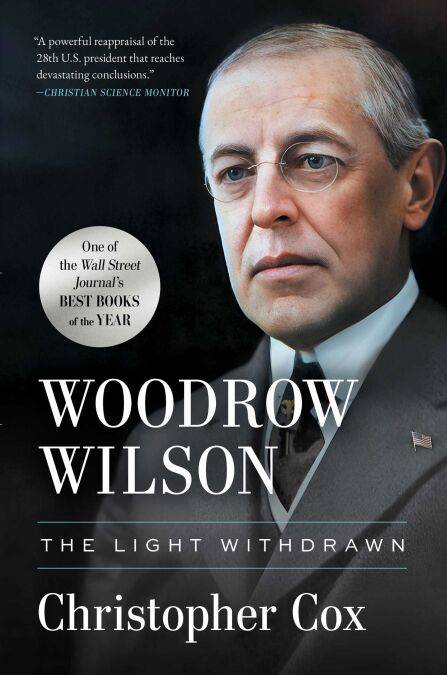
An “assiduously researched” (The Wall Street Journal), “powerful...dispassionate new biography” (The Christian Science Monitor) of Woodrow Wilson, focused on his role in the long national struggle for racial equality and women’s voting rights.
More than a century after his death, Woodrow Wilson’s influence on American politics remains strong while his contradictions loom larger than ever. With panoramic sweep, Woodrow Wilson: The Light Withdrawn examines his life and times, focusing especially on the 28th president’s opposition to the movements for racial equality and women’s voting rights. The Wilson who emerges is a man superbly unsuited to the moment when, as he ascended to the presidency in 1912, the struggle for women’s voting rights in America reached the tipping point.
The first southern Democrat to occupy the White House since the Civil War era brought with him to Washington like-minded men who quickly set to work segregating the federal government. Wilson’s own sympathy for Jim Crow and states’ rights animated his decades-long hostility to the Susan B. Anthony Amendment, which promised universal suffrage backed by federal enforcement. Women demonstrating for voting rights found themselves demonized in government propaganda, beaten and starved while illegally imprisoned, and even confined to the insane asylum.
When, in the twilight of his second term, two-thirds of Congress stood on the threshold of passing the Anthony Amendment, Wilson abruptly switched his position. But in sympathy with like-minded southern Democrats, he endorsed a plan to rewrite the Anthony Amendment to protect Jim Crow restrictions on the voting rights of Black women. The heroes responsible for the eventual success of the unadulterated Anthony Amendment are brought to life by Christopher Cox, an author steeped in the ways of Washington and political power. This is a “Pulitzer Prize–worthy history” (The Washington Examiner) that puts you at the center of one of the greatest advances in the history of American democracy.
More than a century after his death, Woodrow Wilson’s influence on American politics remains strong while his contradictions loom larger than ever. With panoramic sweep, Woodrow Wilson: The Light Withdrawn examines his life and times, focusing especially on the 28th president’s opposition to the movements for racial equality and women’s voting rights. The Wilson who emerges is a man superbly unsuited to the moment when, as he ascended to the presidency in 1912, the struggle for women’s voting rights in America reached the tipping point.
The first southern Democrat to occupy the White House since the Civil War era brought with him to Washington like-minded men who quickly set to work segregating the federal government. Wilson’s own sympathy for Jim Crow and states’ rights animated his decades-long hostility to the Susan B. Anthony Amendment, which promised universal suffrage backed by federal enforcement. Women demonstrating for voting rights found themselves demonized in government propaganda, beaten and starved while illegally imprisoned, and even confined to the insane asylum.
When, in the twilight of his second term, two-thirds of Congress stood on the threshold of passing the Anthony Amendment, Wilson abruptly switched his position. But in sympathy with like-minded southern Democrats, he endorsed a plan to rewrite the Anthony Amendment to protect Jim Crow restrictions on the voting rights of Black women. The heroes responsible for the eventual success of the unadulterated Anthony Amendment are brought to life by Christopher Cox, an author steeped in the ways of Washington and political power. This is a “Pulitzer Prize–worthy history” (The Washington Examiner) that puts you at the center of one of the greatest advances in the history of American democracy.
Specificaties
Betrokkenen
- Auteur(s):
- Uitgeverij:
Inhoud
- Aantal bladzijden:
- 640
- Taal:
- Engels
Eigenschappen
- Productcode (EAN):
- 9781668010808
- Verschijningsdatum:
- 4/11/2024
- Uitvoering:
- E-book
- Beveiligd met:
- Adobe DRM
- Formaat:
- ePub


Alleen bij Standaard Boekhandel
+ 19 punten op je klantenkaart van Standaard Boekhandel
CADEAU

AANGERADEN


Beoordelingen
We publiceren alleen reviews die voldoen aan de voorwaarden voor reviews. Bekijk onze voorwaarden voor reviews.