


- Afhalen na 1 uur in een winkel met voorraad
- Gratis thuislevering in België vanaf € 30
- Ruim aanbod met 7 miljoen producten
- Afhalen na 1 uur in een winkel met voorraad
- Gratis thuislevering in België vanaf € 30
- Ruim aanbod met 7 miljoen producten





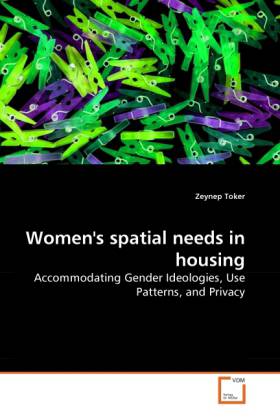
Women's spatial needs in housing
Accommodating Gender Ideologies, Use Patterns, and Privacy
Zeynep Toker
Paperback | Engels
€ 48,45
+ 96 punten
Omschrijving
Today, the conventional households, which are composed of a breadwinning husband, a homemaking wife, and children, constitute only 9% of the population in the United States. However, housing is still designed to accommodate the conventional households. As the contemporary roles of women have evolved with the transformation of household types form conventional to unconventional, the time women spent for housework has also decreased primarily due to the changes in their gender ideologies. Yet, the conventional housing design fails to accommodate contemporary women's spatial needs in their houses. Although research has been conducted to show that women's gender ideologies influence the time they spent for housework, which influences their use patterns, perception, privacy, and that different housing types are needed to accommodate the increasing number of unconventional households, research into women's spatial needs in housing has been limited. This study is an attempt to understand women's spatial needs in housing.
Specificaties
Betrokkenen
- Auteur(s):
- Uitgeverij:
Inhoud
- Aantal bladzijden:
- 212
- Taal:
- Engels
Eigenschappen
- Productcode (EAN):
- 9783639274530
- Verschijningsdatum:
- 22/07/2010
- Uitvoering:
- Paperback
- Afmetingen:
- 152 mm x 229 mm
- Gewicht:
- 318 g


Alleen bij Standaard Boekhandel
+ 96 punten op je klantenkaart van Standaard Boekhandel
Cadeau

AANGERADEN


Beoordelingen
We publiceren alleen reviews die voldoen aan de voorwaarden voor reviews. Bekijk onze voorwaarden voor reviews.