


Bedankt voor het vertrouwen het afgelopen jaar! Om jou te bedanken bieden we GRATIS verzending (in België) aan op alles gedurende de hele maand januari.
- Afhalen na 1 uur in een winkel met voorraad
- In januari gratis thuislevering in België
- Ruim aanbod met 7 miljoen producten
Bedankt voor het vertrouwen het afgelopen jaar! Om jou te bedanken bieden we GRATIS verzending (in België) aan op alles gedurende de hele maand januari.
- Afhalen na 1 uur in een winkel met voorraad
- In januari gratis thuislevering in België
- Ruim aanbod met 7 miljoen producten




Omschrijving
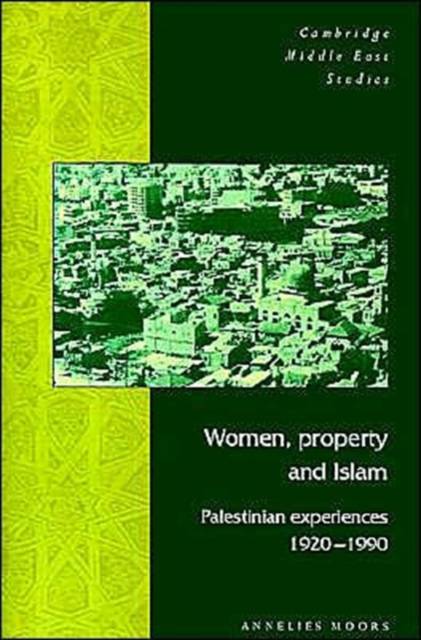
According to Islamic law, women are entitled to inherit property, to receive a dower at marriage, and to manage their own income. Through an anthropological study of Palestinian women in the Jabal Nablus region of the West Bank, Annelies Moors demonstrates that this is not always the case in practice. In fact, their options vary greatly depending on whether they gain access to property through inheritance, through the dower or through paid labour, and, indeed, on their background and position in society. The narratives of wealthy and poor urban women, and of women in the villages and in the refugee camps, indicate under what circumstances they claim property rights, and when they are prevented from doing so, and in which contexts they prefer to give up property in order to gain other advantages. While this is essentially an ethnographic work, the author's use of court records has enabled her to address major historical changes in women's ability to negotiate their rights to properly, focusing on the relation between local traditions, international politics and transnational labour migration.
Specificaties
Betrokkenen
- Auteur(s):
- Uitgeverij:
Inhoud
- Aantal bladzijden:
- 288
- Taal:
- Engels
- Reeks:
- Reeksnummer:
- nr. 3
Eigenschappen
- Productcode (EAN):
- 9780521483551
- Verschijningsdatum:
- 29/02/1996
- Uitvoering:
- Paperback
- Formaat:
- Trade paperback (VS)
- Afmetingen:
- 150 mm x 226 mm
- Gewicht:
- 444 g


Alleen bij Standaard Boekhandel
+ 92 punten op je klantenkaart van Standaard Boekhandel
SOLDEN


Beoordelingen
We publiceren alleen reviews die voldoen aan de voorwaarden voor reviews. Bekijk onze voorwaarden voor reviews.