


- Afhalen na 1 uur in een winkel met voorraad
- Gratis thuislevering in België vanaf € 30
- Ruim aanbod met 7 miljoen producten
- Afhalen na 1 uur in een winkel met voorraad
- Gratis thuislevering in België vanaf € 30
- Ruim aanbod met 7 miljoen producten





€ 48,45
+ 96 punten
Omschrijving
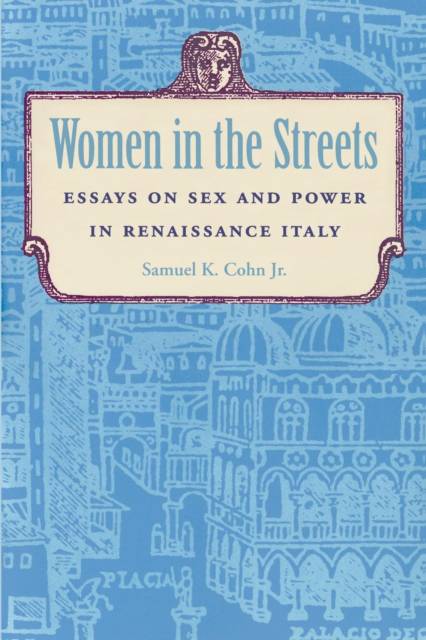
"These seven essays on women, sex, violence, and piety in Renaissance Italy," writes historian Samuel Cohn Jr., "bespeak the darker side of the Renaissance and, in particular, the decline in Italian women's status from the late fourteenth century until the Counter Reformation visitations of the 1570s. In this sense, these essays run directly counter to Jacob Burckhardt's claim for Renaissance Italy, 'that women stood on a footing of perfect equality with men." Challenging conventional views of the history of women in the Italian Renaissance, Cohn examines the lives primarily of non-elite women and looks at their experiences in various city-states and regions, thus offering a different perspective from the history of aristocratic and well-to-do women in the large city-states. Drawing on a wide range of archival documentation, Cohn also relies on large sets of quantitative material to reveal a multifaceted view of women's social worlds not seen from the letters of patrician ladies or the prescriptive judgments of Renaissance moralists. Within the larger historical contexts of the Black Death, the growth of territorial states, and the Counter Reformation, Women in the Streets charts changes in law, the structure and accessibility of the criminal courts, and the customs and mentalities that shaped women's lot, from infanticide to the control of sexual mores. Ultimately, Cohn argues, women are the protagonists of this book, whether the issue is their support of other women or the resolution of conflict in the streets of Florence, the control of their own dowries or the salvation of their own souls.
Specificaties
Betrokkenen
- Auteur(s):
- Uitgeverij:
Inhoud
- Aantal bladzijden:
- 264
- Taal:
- Engels
Eigenschappen
- Productcode (EAN):
- 9780801853098
- Verschijningsdatum:
- 11/12/1996
- Uitvoering:
- Paperback
- Formaat:
- Trade paperback (VS)
- Afmetingen:
- 153 mm x 229 mm
- Gewicht:
- 399 g


Alleen bij Standaard Boekhandel
+ 96 punten op je klantenkaart van Standaard Boekhandel
AANGERADEN


Beoordelingen
We publiceren alleen reviews die voldoen aan de voorwaarden voor reviews. Bekijk onze voorwaarden voor reviews.