


- Afhalen na 1 uur in een winkel met voorraad
- Gratis thuislevering in België vanaf € 30
- Ruim aanbod met 7 miljoen producten
- Afhalen na 1 uur in een winkel met voorraad
- Gratis thuislevering in België vanaf € 30
- Ruim aanbod met 7 miljoen producten





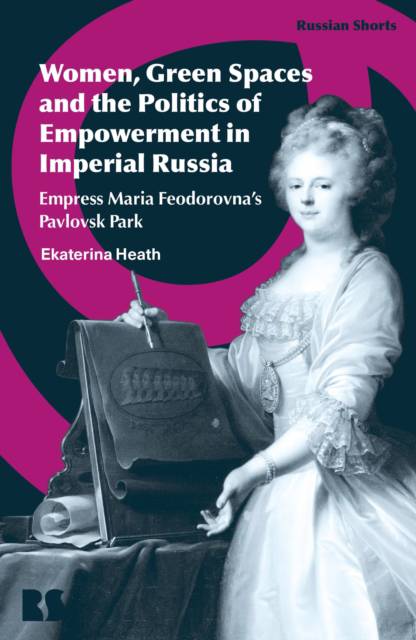
Women, Gardens, and Agency in Imperial Russia
Empress Maria Feodorovna's Pavlovsk Park
Ekaterina Heath
€ 103,45
+ 206 punten
Omschrijving
This book draws on the rich historical record of the Russian royal court to demonstrate how green spaces have been used as an instrument of diplomatic and political influence. Ekaterina Heath convincingly argues that parks like Pavlovsk are a fruitful new primary source, here revealing the previously obscured evidence of women's political activities. In 19th-century Russia, green spaces gave women voice and agency, frequently taken away from them by the patriarchal power structures. Women, Green Spaces and the Politics of Empowerment in Imperial Russia challenges the preceding narratives of these structures as being solely masculine. It also argues for the need to consider consorts in the analysis of political life at the Russian court. Their soft power strategies were deployed through their gardens, the main tool of political propaganda in the long 18th century.
Ekaterina Heath discusses Pavlovsk's use for building relationships, promoting virtues, mounting political arguments, and writing Russian history. She explores the strategies used by Empress Maria Fedorovna to influence Catherine II and Paul I to maintain her access to power in a precarious political environment. Heath then goes on to analyse Dowager Empress Maria Fedorovna's use of her garden to grow her power after the death of her husband, Paul I, and her son Alexander I's ascension to the throne.Specificaties
Betrokkenen
- Auteur(s):
- Uitgeverij:
Inhoud
- Aantal bladzijden:
- 144
- Taal:
- Engels
- Reeks:
Eigenschappen
- Productcode (EAN):
- 9781350544505
- Verschijningsdatum:
- 14/05/2026
- Uitvoering:
- Hardcover
- Formaat:
- Genaaid
- Afmetingen:
- 127 mm x 203 mm
- Gewicht:
- 267 g


Alleen bij Standaard Boekhandel
+ 206 punten op je klantenkaart van Standaard Boekhandel
Cadeau

AANGERADEN


Beoordelingen
We publiceren alleen reviews die voldoen aan de voorwaarden voor reviews. Bekijk onze voorwaarden voor reviews.