


- Afhalen na 1 uur in een winkel met voorraad
- Gratis thuislevering in België vanaf € 30
- Ruim aanbod met 7 miljoen producten
- Afhalen na 1 uur in een winkel met voorraad
- Gratis thuislevering in België vanaf € 30
- Ruim aanbod met 7 miljoen producten





€ 88,45
+ 176 punten
Omschrijving
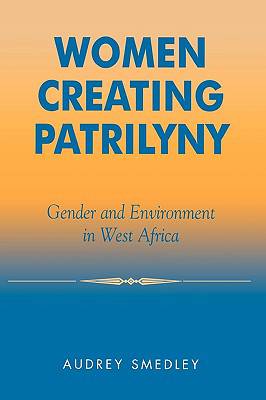
Audrey Smedley offers a unique interpretation of the role of women in traditional patrilineal societies. Her research with the Birom people of Nigeria reveals that one reason for the dominance of patrilyny as an organizing principle in human societies is that many of its critical features were in fact invented by women. She raises new questions about the nature of patrilineal systems, and why women have protected and promoted the values and principles of patrilyny in many societies. Smedley's study of the Birom contradicts the vision of women as passive agents in the construction of social realities. She shows how relationships among men are more rigidly cast than those among women, or between women and men. Individual chapters explore the nature of gender distinctions, how they evolved historically, and how women's decision-making contributes to the successful exploitation of their environment. Smedley critiques Western feminist philosophy and beliefs as they have been applied to indigenous African peoples. This book is a contribution to new global studies that document the realities of women's lives that often contradict Western assumptions. Her book will be a valuable resource for researchers in anthropological kinship and theory, gender studies, race & ethnicity, and African studies.
Specificaties
Betrokkenen
- Auteur(s):
- Uitgeverij:
Inhoud
- Aantal bladzijden:
- 284
- Taal:
- Engels
Eigenschappen
- Productcode (EAN):
- 9780759103184
- Verschijningsdatum:
- 30/12/2003
- Uitvoering:
- Paperback
- Formaat:
- Trade paperback (VS)
- Afmetingen:
- 152 mm x 231 mm
- Gewicht:
- 467 g


Alleen bij Standaard Boekhandel
+ 176 punten op je klantenkaart van Standaard Boekhandel
Cadeau

AANGERADEN


Beoordelingen
We publiceren alleen reviews die voldoen aan de voorwaarden voor reviews. Bekijk onze voorwaarden voor reviews.