


- Afhalen na 1 uur in een winkel met voorraad
- Gratis thuislevering in België vanaf € 30
- Ruim aanbod met 7 miljoen producten
- Afhalen na 1 uur in een winkel met voorraad
- Gratis thuislevering in België vanaf € 30
- Ruim aanbod met 7 miljoen producten





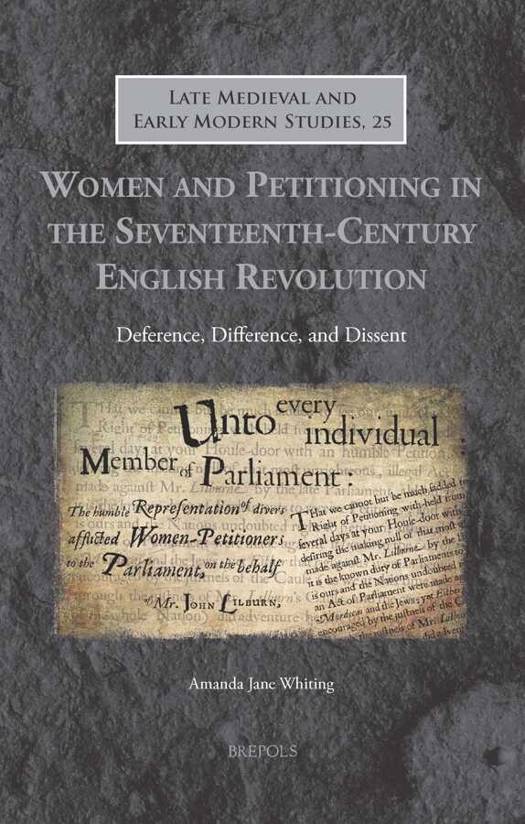
Women and Petitioning in the Seventeenth-Century English Revolution
Deference, Difference, and Dissent
Amanda Jane Whiting
€ 116,60
+ 233 punten
Eenvoudig bestellen
Veilig betalen


Gratis thuislevering vanaf € 30 (via bpost)
Gratis levering in je Standaard Boekhandel
Omschrijving
During the English Civil Wars and Revolution (1640-60), the affairs of Church and State came under a crucial new form of comment and critique, in the form of public petitions. Petitioning was a readily available mode of communication for women, and this study explores the ways in which petitioning in seventeenth-century England was adapted out of and differed from pre-Revolutionary modes, whilst also highlighting gendered conventions and innovations of petitioning in that period. Male petitioning in the seventeenth century did not have to negotiate the cultural assumptions about intellectual inferiority and legal incapacity that constrained women. Yet just because women did not claim separate (and modern) women's rights does not mean that they were passive, quiescent, or had no political agency. On the contrary, as this study shows, women in the Revolution could use petitioning as a powerful way to address those in power, precisely because it was done from an assumed position of weakness. The petition is not simply a text, authored by a single pen, but a series of social transactions, performed in multiple social and political settings, frequently involving people previously excluded from participation in political discussion or action. To the extent that women participated in collective petitioning, or turned their individual addresses into printed artefacts for public scrutiny, they also participated in the public sphere of political opinion and debate.
Specificaties
Betrokkenen
- Auteur(s):
- Uitgeverij:
Inhoud
- Aantal bladzijden:
- 368
- Taal:
- Engels
- Reeks:
- Reeksnummer:
- nr. 25
Eigenschappen
- Productcode (EAN):
- 9782503547787
- Verschijningsdatum:
- 31/07/2015
- Uitvoering:
- Hardcover
- Formaat:
- Genaaid
- Afmetingen:
- 163 mm x 239 mm
- Gewicht:
- 816 g


Alleen bij Standaard Boekhandel
+ 233 punten op je klantenkaart van Standaard Boekhandel
CADEAU

AANGERADEN


Beoordelingen
We publiceren alleen reviews die voldoen aan de voorwaarden voor reviews. Bekijk onze voorwaarden voor reviews.