


- Afhalen na 1 uur in een winkel met voorraad
- Gratis thuislevering in België vanaf € 30
- Ruim aanbod met 7 miljoen producten
- Afhalen na 1 uur in een winkel met voorraad
- Gratis thuislevering in België vanaf € 30
- Ruim aanbod met 7 miljoen producten





Omschrijving
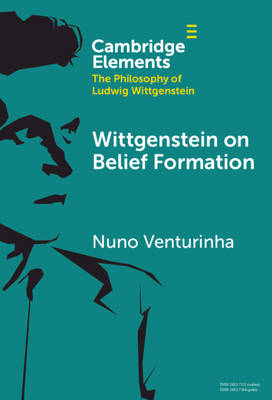
This Element traces the development of Wittgenstein's views on belief formation throughout the different phases of his philosophy. Section 1 concentrates on the Tractarian period, where the sparse references to belief consist primarily of reactions to Russell. The logical purism of the early Wittgenstein led him to reject psychological stances such as those found in Russell's epistemological works. Section 2 explores Wittgenstein's 'middle' period, focusing on his evolving views on belief formation, influenced by his shift to viewing language as a social practice. It addresses key texts, including The Big Typescript and 'Cause and Effect', and links the psychological mechanisms of belief to Wittgenstein's later grammatical investigations in an analysis that extends to his reflections on mathematics and religion. Section 3 reconstructs the intellectual trajectory that would culminate in On Certainty, tracing the influence of Moore and Newman on the range of belief-forming processes Wittgenstein examines in his final writings.
Specificaties
Betrokkenen
- Auteur(s):
- Uitgeverij:
Inhoud
- Aantal bladzijden:
- 75
- Taal:
- Engels
- Reeks:
Eigenschappen
- Productcode (EAN):
- 9781009663083
- Verschijningsdatum:
- 31/07/2026
- Uitvoering:
- Hardcover
- Formaat:
- Genaaid


Alleen bij Standaard Boekhandel
+ 158 punten op je klantenkaart van Standaard Boekhandel
Cadeau

AANGERADEN


Beoordelingen
We publiceren alleen reviews die voldoen aan de voorwaarden voor reviews. Bekijk onze voorwaarden voor reviews.