


- Afhalen na 1 uur in een winkel met voorraad
- Gratis thuislevering in België vanaf € 30
- Ruim aanbod met 7 miljoen producten
- Afhalen na 1 uur in een winkel met voorraad
- Gratis thuislevering in België vanaf € 30
- Ruim aanbod met 7 miljoen producten





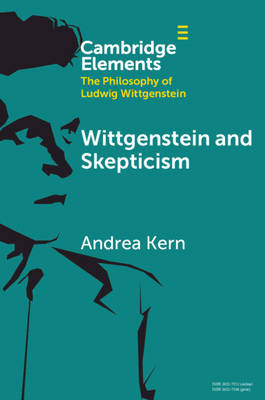
Omschrijving
This Element is about Wittgenstein's engagement with skepticism. Two forms of skepticism will be at the center of this Element: skepticism concerning our knowledge of the 'external world, ' and skepticism concerning our knowledge of 'other minds.' It will be shown that Wittgenstein is neither a skeptic nor an anti-skeptic. Rather, Wittgenstein thinks of the skeptic's doubt as a form of denial: a denial of knowledge that one cannot but have. The aim of this Element is to bring out what it means to think of the skeptic's doubt in a Wittgensteinian way, that is, as a doubt that manifests a denial of knowledge that one cannot but have, rather than a philosophical position about the possibility of knowledge that is either true or false and hence an object either of justification or refutation. Wittgenstein's relation to skepticism is therefore unique and highly original.
Specificaties
Betrokkenen
- Auteur(s):
- Uitgeverij:
Inhoud
- Aantal bladzijden:
- 75
- Taal:
- Engels
- Reeks:
Eigenschappen
- Productcode (EAN):
- 9781009592543
- Verschijningsdatum:
- 31/07/2026
- Uitvoering:
- Paperback
- Formaat:
- Trade paperback (VS)


Alleen bij Standaard Boekhandel
+ 48 punten op je klantenkaart van Standaard Boekhandel
Cadeau

AANGERADEN


Beoordelingen
We publiceren alleen reviews die voldoen aan de voorwaarden voor reviews. Bekijk onze voorwaarden voor reviews.