


- Afhalen na 1 uur in een winkel met voorraad
- Gratis thuislevering in België vanaf € 30
- Ruim aanbod met 7 miljoen producten
- Afhalen na 1 uur in een winkel met voorraad
- Gratis thuislevering in België vanaf € 30
- Ruim aanbod met 7 miljoen producten





Omschrijving
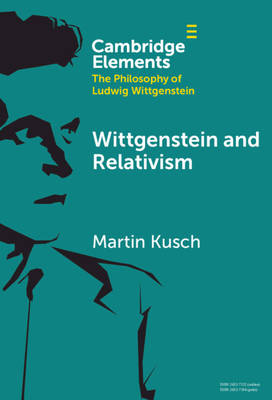
When scholars discuss the question whether Wittgenstein was a relativist, they invariably draw their criteria from recent definitions of relativism. This study tries a different route: it identifies conceptions of relativism that were influential in the early twentieth century, and uses them as foils for interpreting Wittgenstein's philosophy. Section 1 investigates what Wittgenstein meant in speaking of his 'ethnological perspective, ' and how this perspective relates to 'cultural relativism' in anthropology around 1900. Section 2 focuses on Wittgenstein's reflections on logic and mathematics as 'ethnological phenomena.' In this context, the ethnological perspective brought Wittgenstein close to positions that many of his contemporaries denounced as 'psychologism' and 'sociologism.' Section 3 highlights the role of the ethnological perspective in Wittgenstein's remarks on 'certainties.' Many of these remarks would have been counted as relativistic by leading members of the 'Vienna Circle.'
Specificaties
Betrokkenen
- Auteur(s):
- Uitgeverij:
Inhoud
- Aantal bladzijden:
- 75
- Taal:
- Engels
- Reeks:
Eigenschappen
- Productcode (EAN):
- 9781009554527
- Verschijningsdatum:
- 30/06/2026
- Uitvoering:
- Hardcover
- Formaat:
- Genaaid


Alleen bij Standaard Boekhandel
+ 153 punten op je klantenkaart van Standaard Boekhandel
AANGERADEN


Beoordelingen
We publiceren alleen reviews die voldoen aan de voorwaarden voor reviews. Bekijk onze voorwaarden voor reviews.