



Je cadeautjes zeker op tijd in huis hebben voor de feestdagen? Kom langs in onze winkels en vind het perfecte geschenk!
- Afhalen na 1 uur in een winkel met voorraad
- Gratis thuislevering in België vanaf € 30
- Ruim aanbod met 7 miljoen producten
Je cadeautjes zeker op tijd in huis hebben voor de feestdagen? Kom langs in onze winkels en vind het perfecte geschenk!
- Afhalen na 1 uur in een winkel met voorraad
- Gratis thuislevering in België vanaf € 30
- Ruim aanbod met 7 miljoen producten





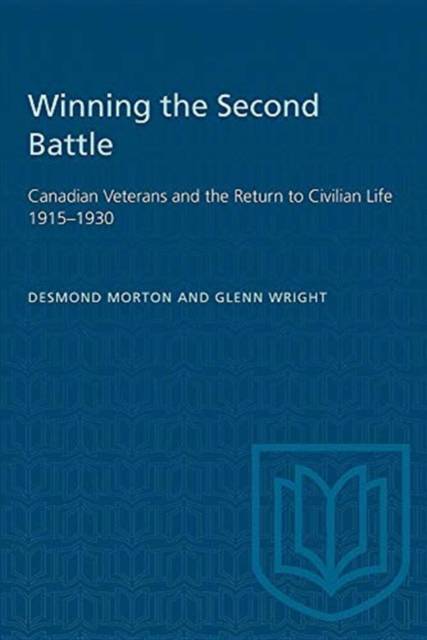
Winning the Second Battle
Canadian Veterans and the Return to Civilian Life 1915-1930
Desmond Morton, Glenn Wright
€ 80,45
+ 160 punten
Omschrijving
More than half a million Canadians served in the First World War. Their return to civilian life presented an enormous challenge to government and social institutions. The degree to which that challenge was met and the far-reaching implications of the veterans' politicization form the core of this study by two eminent Canadian historians.
Desmond Morton and Glenn Wright point out that Canada was a leader among its allies in devising plans for the retraining of disabled soldiers. Canada's pension rates were the most generous in the world. From soldier settlement to returned soldiers' insurance, Ottawa had prepared for returning Canadian armies with a care and foresight that was virtually unique among belligerents. In those carefully laid plans, and in the veterans' organization and struggle to create their own version of civil re-establishment, were the roots of the modern welfare state.
But in the end, the momentum of the veterans' political drive was slowed by diminishing government support and dwindling resources, and veterans ultimately lost their 'Second Battle.' The story of that defeat, never told until now, reveals a great deal about Canadian government, pressure group, and politics in the interwar period.
Desmond Morton and Glenn Wright point out that Canada was a leader among its allies in devising plans for the retraining of disabled soldiers. Canada's pension rates were the most generous in the world. From soldier settlement to returned soldiers' insurance, Ottawa had prepared for returning Canadian armies with a care and foresight that was virtually unique among belligerents. In those carefully laid plans, and in the veterans' organization and struggle to create their own version of civil re-establishment, were the roots of the modern welfare state.
But in the end, the momentum of the veterans' political drive was slowed by diminishing government support and dwindling resources, and veterans ultimately lost their 'Second Battle.' The story of that defeat, never told until now, reveals a great deal about Canadian government, pressure group, and politics in the interwar period.
Specificaties
Betrokkenen
- Auteur(s):
- Uitgeverij:
Inhoud
- Aantal bladzijden:
- 368
- Taal:
- Engels
- Reeks:
Eigenschappen
- Productcode (EAN):
- 9780802066343
- Verschijningsdatum:
- 1/07/1987
- Uitvoering:
- Paperback
- Formaat:
- Trade paperback (VS)
- Afmetingen:
- 156 mm x 234 mm
- Gewicht:
- 517 g


Alleen bij Standaard Boekhandel
+ 160 punten op je klantenkaart van Standaard Boekhandel
CADEAU


Beoordelingen
We publiceren alleen reviews die voldoen aan de voorwaarden voor reviews. Bekijk onze voorwaarden voor reviews.