


- Afhalen na 1 uur in een winkel met voorraad
- Gratis thuislevering in België vanaf € 30
- Ruim aanbod met 7 miljoen producten
- Afhalen na 1 uur in een winkel met voorraad
- Gratis thuislevering in België vanaf € 30
- Ruim aanbod met 7 miljoen producten





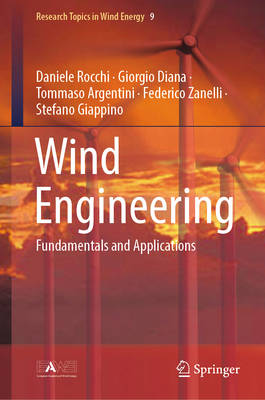
Wind Engineering
Fundamentals and Applications
Daniele Rocchi, Giorgio Diana, Tommaso Argentini, Federico Zanelli, Stefano Giappino
€ 80,45
+ 160 punten
Omschrijving
This textbook provides a thorough exploration of wind effects on the built environment, serving as a valuable reference for students, researchers, and practicing engineers. Wind has always influenced the design and performance of structures, from early construction methods to today's most advanced engineering achievements. In modern practice, the demand for taller buildings, longer-span bridges, and more resilient infrastructure has heightened the need for a deep understanding of wind-structure interaction.
The book begins by introducing the fundamental principles that govern wind characteristics and wind-induced loads. It then progresses to specialized topics such as wind climate analysis, aerodynamics, and wind tunnel testing. Special attention is given to how structures--including bridges, towers, and vehicles--respond to wind, emphasizing the impact on their safety, serviceability, and overall performance. A distinctive feature of this textbook is its integration of theoretical foundations with real-world applications. Drawing on current research and case studies, it provides readers with the tools to approach practical design problems while maintaining a solid grasp of fundamental concepts. The work also presents recent advances in wind tunnel methodologies and numerical modelling of fluid-structure interaction, providing insights into ongoing developments in the field. Ultimately, this book empowers readers with both knowledge and a critical perspective, fostering a deeper understanding of wind engineering and its essential role in the sustainable and resilient development of the built environment.
The book begins by introducing the fundamental principles that govern wind characteristics and wind-induced loads. It then progresses to specialized topics such as wind climate analysis, aerodynamics, and wind tunnel testing. Special attention is given to how structures--including bridges, towers, and vehicles--respond to wind, emphasizing the impact on their safety, serviceability, and overall performance. A distinctive feature of this textbook is its integration of theoretical foundations with real-world applications. Drawing on current research and case studies, it provides readers with the tools to approach practical design problems while maintaining a solid grasp of fundamental concepts. The work also presents recent advances in wind tunnel methodologies and numerical modelling of fluid-structure interaction, providing insights into ongoing developments in the field. Ultimately, this book empowers readers with both knowledge and a critical perspective, fostering a deeper understanding of wind engineering and its essential role in the sustainable and resilient development of the built environment.
Specificaties
Betrokkenen
- Auteur(s):
- Uitgeverij:
Inhoud
- Aantal bladzijden:
- 306
- Taal:
- Engels
- Reeks:
- Reeksnummer:
- nr. 9
Eigenschappen
- Productcode (EAN):
- 9783032174222
- Verschijningsdatum:
- 20/06/2026
- Uitvoering:
- Hardcover
- Formaat:
- Genaaid
- Afmetingen:
- 155 mm x 235 mm


Alleen bij Standaard Boekhandel
+ 160 punten op je klantenkaart van Standaard Boekhandel
Cadeau

AANGERADEN


Beoordelingen
We publiceren alleen reviews die voldoen aan de voorwaarden voor reviews. Bekijk onze voorwaarden voor reviews.