


- Afhalen na 1 uur in een winkel met voorraad
- Gratis thuislevering in België vanaf € 30
- Ruim aanbod met 7 miljoen producten
- Afhalen na 1 uur in een winkel met voorraad
- Gratis thuislevering in België vanaf € 30
- Ruim aanbod met 7 miljoen producten





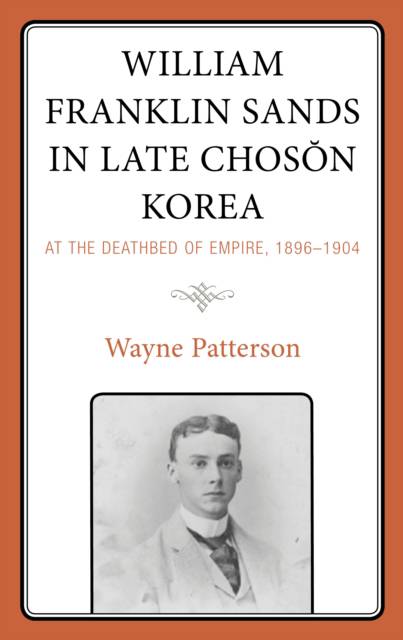
William Franklin Sands in Late Choson Korea
At the Deathbed of Empire, 1896-1904
Wayne Patterson
Hardcover | Engels
€ 186,95
+ 373 punten
Omschrijving
After graduation from Georgetown University in 1896, William Franklin Sands joined the US diplomatic corps as second secretary in Tokyo. His year there sparked his interest in East Asia, so when a position in Korea opened, he took it, with the help of his influential father, an admiral in the US navy. For two years he served under US Minister Horace Allen until a more powerful position opened as chief qdviser to the Korean government in 1900. As the most influential foreign adviser, Sands attempted to convince Emperor Kojong to undertake reforms and to promote Korean neutrality to keep the country independent. The author argues, however, that Sands was hampered by corrucpt officials who had the ear of the emperor, by the Japanese and the Russians who competed for influence and who tried to replace Sands with their own advisers, and, ironically, by Horace Allen. When he lost the confidence of Kojong and when the Russo-Japanese War broke out, Sands was forced out, having failed to maintain Korea's independence as Japan moved to take over. Although his subsequent activities included other diplomatic postings, teaching, and writing, he maintained an interest in Korea and offered his services as World War Two raged.
Specificaties
Betrokkenen
- Auteur(s):
- Uitgeverij:
Inhoud
- Aantal bladzijden:
- 180
- Taal:
- Engels
Eigenschappen
- Productcode (EAN):
- 9781793649270
- Verschijningsdatum:
- 29/07/2021
- Uitvoering:
- Hardcover
- Formaat:
- Genaaid
- Afmetingen:
- 152 mm x 229 mm
- Gewicht:
- 412 g



Alleen bij Standaard Boekhandel
+ 373 punten op je klantenkaart van Standaard Boekhandel
Cadeau

AANGERADEN


Beoordelingen
We publiceren alleen reviews die voldoen aan de voorwaarden voor reviews. Bekijk onze voorwaarden voor reviews.