


- Afhalen na 1 uur in een winkel met voorraad
- Gratis thuislevering in België vanaf € 30
- Ruim aanbod met 7 miljoen producten
- Afhalen na 1 uur in een winkel met voorraad
- Gratis thuislevering in België vanaf € 30
- Ruim aanbod met 7 miljoen producten





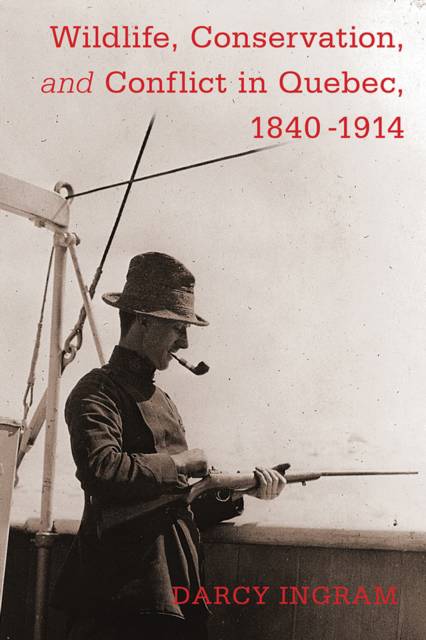
Wildlife, Conservation, and Conflict in Quebec, 1840-1914
Darcy Ingram
€ 64,45
+ 128 punten
Omschrijving
Despite the popular assumption that wildlife conservation is a recent phenomenon, it emerged over a century and a half ago in an era more closely associated with wildlife depletion than preservation. In Wildlife, Conservation, and Conflict in Quebec, Darcy Ingram explores the combination of NGOs, fish and game clubs, and state-administered leases that formed the basis of a unique system of wildlife conservation in North America. Inspired by a long-standing belief in progress, improvement, and social order based on European as well as North American models, this system effectively privatized Quebec's fish and game resources, often to the detriment of commercial and subsistence hunters and fishers.
Specificaties
Betrokkenen
- Auteur(s):
- Uitgeverij:
Inhoud
- Aantal bladzijden:
- 304
- Taal:
- Engels
- Reeks:
Eigenschappen
- Productcode (EAN):
- 9780774821414
- Verschijningsdatum:
- 1/01/2014
- Uitvoering:
- Paperback
- Formaat:
- Trade paperback (VS)
- Afmetingen:
- 150 mm x 226 mm
- Gewicht:
- 453 g


Alleen bij Standaard Boekhandel
+ 128 punten op je klantenkaart van Standaard Boekhandel
Cadeau

AANGERADEN


Beoordelingen
We publiceren alleen reviews die voldoen aan de voorwaarden voor reviews. Bekijk onze voorwaarden voor reviews.