


- Afhalen na 1 uur in een winkel met voorraad
- Gratis thuislevering in België vanaf € 30
- Ruim aanbod met 7 miljoen producten
- Afhalen na 1 uur in een winkel met voorraad
- Gratis thuislevering in België vanaf € 30
- Ruim aanbod met 7 miljoen producten





Omschrijving
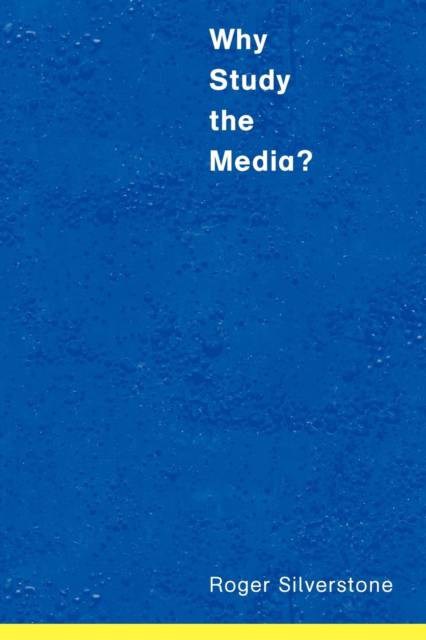
"It′s easy to be snobbish about media culture; the great merit of Roger Silverstone′s book is to make the reader understand just how important that culture is." --Richard Sennett, New York University "A remarkable book which argues for a new paradigm for the study of the media." --Daniel Dayan, Centre National de la Recherche "A persuasive and sophisticated discussion of the role of the media in modern life at the threshold of the twenty-first century." --Ellen Seiter, University of California "A very important book, one that moves media theory and argument on at long last. This is an attempt to get people to think differently about the media - not just when they are writing essays, but also when they are arguing about media in everyday life." --Simon Frith, University of Stirling The centrality of the media, all media, to human experience - from the conduct of everyday life, to the exercise of power, to the creation of culture - is inescapable. We live in an intensely mediated world. Yet the academic study of the media has rarely made its own insights accessible and relevant to those outside its own limited sphere. Indeed it is constantly under attack for its lack of rigour, aparent failure to address the needs of industry and its inability to tell us anything substantive about the world in which we live. Written as a manifesto and in order to set a new intellectual agenda, "Why Study the Media?" argues for the importance of the media in our culture and society, and the consequent necessity of taking the media seriously as an object of enlightened but rigorous investigation. At once human and humane, "Why Study the Media?" will be welcomed by all those in search of new ways of thinking about our mediated world.
Specificaties
Betrokkenen
- Auteur(s):
- Uitgeverij:
Inhoud
- Aantal bladzijden:
- 176
- Taal:
- Engels
Eigenschappen
- Productcode (EAN):
- 9780761964544
- Verschijningsdatum:
- 13/12/1999
- Uitvoering:
- Paperback
- Formaat:
- Trade paperback (VS)
- Afmetingen:
- 161 mm x 239 mm
- Gewicht:
- 326 g


Alleen bij Standaard Boekhandel
+ 409 punten op je klantenkaart van Standaard Boekhandel
Cadeau

AANGERADEN


Beoordelingen
We publiceren alleen reviews die voldoen aan de voorwaarden voor reviews. Bekijk onze voorwaarden voor reviews.