


- Afhalen na 1 uur in een winkel met voorraad
- Gratis thuislevering in België vanaf € 30
- Ruim aanbod met 7 miljoen producten
- Afhalen na 1 uur in een winkel met voorraad
- Gratis thuislevering in België vanaf € 30
- Ruim aanbod met 7 miljoen producten





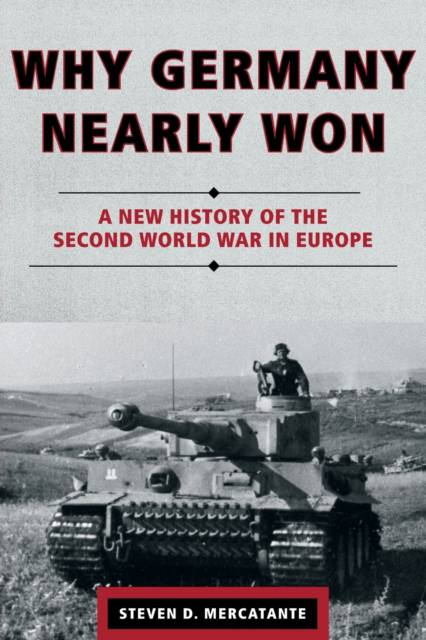
Why Germany Nearly Won
A New History of the Second World War in Europe
Steven D Mercatante
Paperback | Engels
€ 67,45
+ 134 punten
Uitvoering
Omschrijving
Conventional wisdom explains German defeat during World War II as almost inevitable, primarily for reasons of Allied economic or military brute force created when Germany attacked the Soviet Union in 1941 and entered into a two-front war.
Why Germany Nearly Won: A New History of the Second World War in Europe challenges this conventional wisdom, highlighting how the re-establishment of the traditional German art of war--updated to accommodate new weapons systems--paved the way for Germany to forge a considerable military edge over its much larger rivals by playing to its qualitative strengths as a continental power. Ironically, these methodologies also created and exacerbated internal contradictions that undermined the very war machine they enabled and left it vulnerable to enemies with the capacity to adapt and build on potent military traditions of their own. The book begins by examining the methods by which the German economy and military prepared for war and the military establishment's formidable strengths--plus weaknesses. Steven D. Mercatante then offers an entirely new perspective on the Second World War in Europe. He demonstrates how Germany, through its invasion of the Soviet Union, came within a hairsbreadth of cementing a European-based empire that would have allowed the Third Reich to challenge the Anglo-American alliance for global hegemony. This outcome, according to commonly cited measures of military potential, should have been completely out of Germany's reach. The author concludes by tracing the final years of the war and assessing how Germany was able to hang on far longer than expected against the world's most powerful nations working in concert to engineer its defeat.Specificaties
Betrokkenen
- Auteur(s):
- Uitgeverij:
Inhoud
- Aantal bladzijden:
- 426
- Taal:
- Engels
Eigenschappen
- Productcode (EAN):
- 9781442236868
- Verschijningsdatum:
- 10/07/2014
- Uitvoering:
- Paperback
- Formaat:
- Trade paperback (VS)
- Afmetingen:
- 153 mm x 232 mm
- Gewicht:
- 580 g



Alleen bij Standaard Boekhandel
+ 134 punten op je klantenkaart van Standaard Boekhandel
Cadeau

AANGERADEN


Beoordelingen
We publiceren alleen reviews die voldoen aan de voorwaarden voor reviews. Bekijk onze voorwaarden voor reviews.