


- Afhalen na 1 uur in een winkel met voorraad
- Gratis thuislevering in België vanaf € 30
- Ruim aanbod met 7 miljoen producten
- Afhalen na 1 uur in een winkel met voorraad
- Gratis thuislevering in België vanaf € 30
- Ruim aanbod met 7 miljoen producten





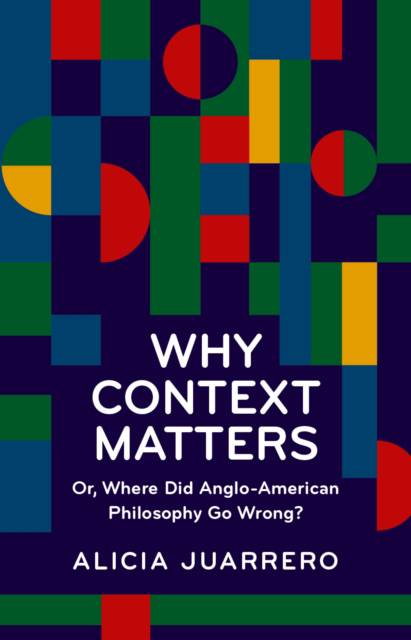
Why Context Matters
Or, Where Did Anglo-American Philosophy Go Wrong?
Alicia Juarrero
Paperback | Engels
€ 25,95
+ 51 punten
Omschrijving
Why were so many luminaries of European philosophy - such as Bergson, Heidegger, Husserl, Merleau-Ponty, and Sartre, even Marx and Freud - kept out of the philosophy curriculum of Anglo-American universities for most of the 20th century? Why were the schools of philosophy they founded derided as continental philosophy and deemed more suitable for the departments of literature and psychology than philosophy? This book argues that the institutionally sanctioned contrast between allegedly legitimate philosophy and its spurious continental counterpart became entrenched thanks to two intertwined metaphysical presuppositions at the heart of positivism. The first is the principle that higher-level complex systems are epiphenomenal. The second is that all causes are mechanical.In contrast to their continental European counterparts, Anglo-American metaphysicians and philosophers of science repeatedly resisted the idea that higher level phenomena might be, ontologically-speaking, relational. This book proposes that, had the alternative path that emphasizes context-dependence been selected, a scientifically respectable relational ontology might have come to inform Anglo-American metaphysics and epistemology as well as the actual practice of science - without falling prey to non-natural deus ex machina proposals.Four female British philosophers at Oxford during WWII attempted to do exactly that. Anscombe, Foot, Midgley, and Murdoch raised serious objections to Oxbridge's Newton-inspired positivism as early as the 1940s. The four good friends advocated for a context-dependent worldview. This book situates the four women philosophers' valiant challenge to the entrenched paradigm as a case study of exactly why and how context matters.
Specificaties
Betrokkenen
- Auteur(s):
- Uitgeverij:
Inhoud
- Aantal bladzijden:
- 174
- Taal:
- Engels
Eigenschappen
- Productcode (EAN):
- 9781788361378
- Verschijningsdatum:
- 2/12/2025
- Uitvoering:
- Paperback
- Formaat:
- Trade paperback (VS)
- Afmetingen:
- 135 mm x 215 mm
- Gewicht:
- 199 g


Alleen bij Standaard Boekhandel
+ 51 punten op je klantenkaart van Standaard Boekhandel
Cadeau

AANGERADEN


Beoordelingen
We publiceren alleen reviews die voldoen aan de voorwaarden voor reviews. Bekijk onze voorwaarden voor reviews.