


- Afhalen na 1 uur in een winkel met voorraad
- Gratis thuislevering in België vanaf € 30
- Ruim aanbod met 7 miljoen producten
- Afhalen na 1 uur in een winkel met voorraad
- Gratis thuislevering in België vanaf € 30
- Ruim aanbod met 7 miljoen producten





€ 415,95
+ 831 punten
Omschrijving
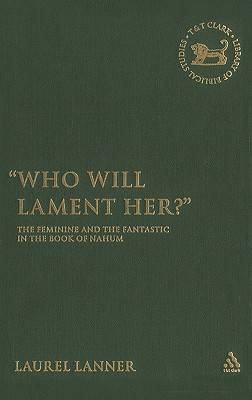
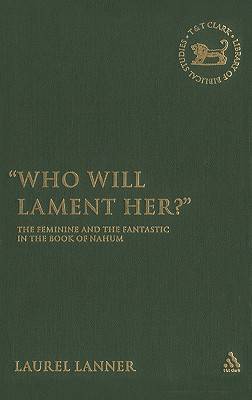
It is not surprising that non-academic bible readers largely ignore Nahum. Comprising only a few pages, it is easily overlooked in the midst of the twelve Minor Prophets. When a reader does stop in passing, the book appears to be brief, brutish, and uncomfortably violent. Looking more closely, however, readers may observe echoes of other much greater prophets, such as Isaiah and Ezekiel, perhaps even of the Psalms, and conclude that the book is a rather second-rate pastiche of other writings, although some rather brilliant poetry is woven into it. Who Will Lament Her? takes a fresh look at Nahum. It explores further the presence of the feminine in the book of Nahum, the extent to which it is present in the text, how the structure of the text makes the feminine both present and absent, and the possible reasons why this is so. Lanner takes two methodological approaches. The first sets out to show that it is possible that a feminine deity is present in the text of Nahum. The second approach engages three theories of the literary fantastic with the text, taking into consideration the findings of the historical and exegetical work. Using these two approaches hand in hand results in a fresh reading of Nahum.
Specificaties
Betrokkenen
- Auteur(s):
- Uitgeverij:
Inhoud
- Aantal bladzijden:
- 280
- Taal:
- Engels
- Reeks:
Eigenschappen
- Productcode (EAN):
- 9780567026026
- Verschijningsdatum:
- 24/05/2006
- Uitvoering:
- Hardcover
- Formaat:
- Genaaid
- Afmetingen:
- 152 mm x 229 mm
- Gewicht:
- 585 g


Alleen bij Standaard Boekhandel
+ 831 punten op je klantenkaart van Standaard Boekhandel
Cadeau

AANGERADEN


Beoordelingen
We publiceren alleen reviews die voldoen aan de voorwaarden voor reviews. Bekijk onze voorwaarden voor reviews.