


- Afhalen na 1 uur in een winkel met voorraad
- Gratis thuislevering in België vanaf € 30
- Ruim aanbod met 7 miljoen producten
- Afhalen na 1 uur in een winkel met voorraad
- Gratis thuislevering in België vanaf € 30
- Ruim aanbod met 7 miljoen producten





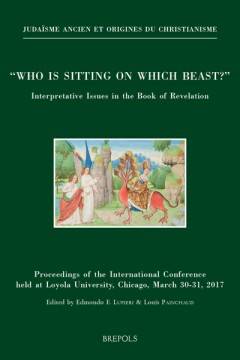
'Who Is Sitting on Which Beast?'
Interpretative Issues in the Book of Revelation: Proceedings of the International Conference Held at Loyola University, Chicago, March 30-31, 2017
Edmondo F. Lupieri
€ 79,50
+ 159 punten
Omschrijving
The Revelation of Jesus Christ, better known as the Apocalypse of John, or simply the Book of Revelation, has always fascinated its readers, both religious and non-religious. Its transmission and reception in a Christian context have given rise to a wide variety of interpretations and controversies. At the heart of this revelation are the enigmatic figures of a pregnant woman appearing in heaven and then fleeing into the desert, a prostitute appearing in the desert and riding a beast, and then the bride of the Lamb, as well as a great city called Babylon, Sodom, and Egypt. Cities, beast, and prostitute are usually interpreted as thinly veiled references to Rome and its empire, and in particular to the emperor Nero. However, this reading raises a number of interpretive problems concerning the relationship between these different female figures and their relation to the beast, which duplicates into a beast from the sea and a beast from the land, and concerning the city that lies beneath Babylon. Although they do not all share the exact same point of view on the Apocalypse of John and on the solutions to these interpretative problems, the contributions gathered in this volume all question the received ideas in one way or another. What they have in common is a regard for the Apocalypse of John as a text strongly rooted in the Judaism of its time, and they place great emphasis on interpreting the text through attention to its author's use of the Jewish Scriptures.
Specificaties
Betrokkenen
- Auteur(s):
- Uitgeverij:
Inhoud
- Aantal bladzijden:
- 336
- Taal:
- Engels
- Reeks:
- Reeksnummer:
- nr. 29
Eigenschappen
- Productcode (EAN):
- 9782503602585
- Verschijningsdatum:
- 28/03/2024
- Uitvoering:
- Paperback
- Formaat:
- Trade paperback (VS)
- Gewicht:
- 579 g


Alleen bij Standaard Boekhandel
+ 159 punten op je klantenkaart van Standaard Boekhandel
Cadeau

AANGERADEN


Beoordelingen
We publiceren alleen reviews die voldoen aan de voorwaarden voor reviews. Bekijk onze voorwaarden voor reviews.