


- Afhalen na 1 uur in een winkel met voorraad
- Gratis thuislevering in België vanaf € 30
- Ruim aanbod met 7 miljoen producten
- Afhalen na 1 uur in een winkel met voorraad
- Gratis thuislevering in België vanaf € 30
- Ruim aanbod met 7 miljoen producten





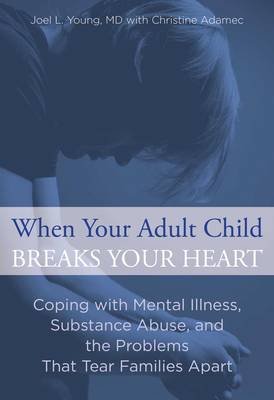
When Your Adult Child Breaks Your Heart
Coping With Mental Illness, Substance Abuse, And The Problems That Tear Families Apart
Joel Young, Christine Adamec
Paperback | Engels
€ 29,95
+ 59 punten
Omschrijving
Behind nearly every adult who is accused of a crime, becomes addicted to drugs or alcohol, or who is severely mentally ill and acting out in public, there is usually at least one extremely stressed-out parent. This parent may initially react with the bad news of their adult child behaving badly with, "Oh no!" followed by, "How can I help to fix this?" A very common third reaction is the thought, "Where did I go wrong--was it something I said or did, or that I failed to do when my child was growing up that caused these issues? Is this really somehow all my fault?" These parents then open their homes, their pocketbooks, their hearts, and their futures to "saving" their adult child--who may go on to leave them financially and emotionally broken. Sometimes these families also raise the children their adult children leave behind: 1.6 million grandparents in the U.S. are in this situation.
This helpful book presents families with quotations and scenarios from real suffering parents (who are not identified), practical advice, and tested strategies for coping. It also discusses the fact that parents of adult children may themselves need therapy and medications, especially antidepressants. The book is written in a clear, reassuring manner by Dr. Joel L. Young, medical director of the Rochester Center for Behavioral Medicine in Rochester Hills, Michigan; with noted medical writer Christine Adamec, author of many books in the field.
In the wake of the Newtown shooting and the viral popularity of the post "I Am Adam Lanza's Mother," America is now taking a fresh look, not only at gun control, but also on how we treat mental illness. Another major issue is our support or stigmatization of those with adult children who are a major risk to their families as well to society itself. This book is part of that conversation.
This helpful book presents families with quotations and scenarios from real suffering parents (who are not identified), practical advice, and tested strategies for coping. It also discusses the fact that parents of adult children may themselves need therapy and medications, especially antidepressants. The book is written in a clear, reassuring manner by Dr. Joel L. Young, medical director of the Rochester Center for Behavioral Medicine in Rochester Hills, Michigan; with noted medical writer Christine Adamec, author of many books in the field.
In the wake of the Newtown shooting and the viral popularity of the post "I Am Adam Lanza's Mother," America is now taking a fresh look, not only at gun control, but also on how we treat mental illness. Another major issue is our support or stigmatization of those with adult children who are a major risk to their families as well to society itself. This book is part of that conversation.
Specificaties
Betrokkenen
- Auteur(s):
- Uitgeverij:
Inhoud
- Aantal bladzijden:
- 264
- Taal:
- Engels
Eigenschappen
- Productcode (EAN):
- 9780762792979
- Verschijningsdatum:
- 3/12/2013
- Uitvoering:
- Paperback
- Formaat:
- Trade paperback (VS)
- Afmetingen:
- 152 mm x 226 mm
- Gewicht:
- 294 g


Alleen bij Standaard Boekhandel
+ 59 punten op je klantenkaart van Standaard Boekhandel
Cadeau

AANGERADEN


Beoordelingen
We publiceren alleen reviews die voldoen aan de voorwaarden voor reviews. Bekijk onze voorwaarden voor reviews.