


- Afhalen na 1 uur in een winkel met voorraad
- Gratis thuislevering in België vanaf € 30
- Ruim aanbod met 7 miljoen producten
- Afhalen na 1 uur in een winkel met voorraad
- Gratis thuislevering in België vanaf € 30
- Ruim aanbod met 7 miljoen producten





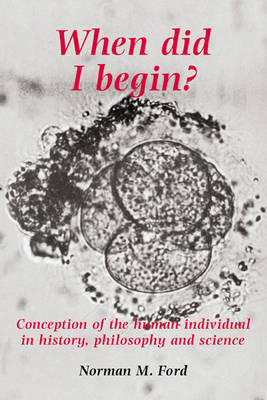
When Did I Begin?
Conception of the Human Individual in History, Philosophy and Science
Norman D Ford
€ 98,45
+ 196 punten
Omschrijving
When Did I Begin? investigates the theoretical, moral, and biological issues surrounding the debate over the beginning of human life. With the continuing controversy over the use of in vitro fertilization techniques and experimentation with human embryos, these issues have been forced into the arena of public debate. Following a detailed analysis of the history of the question, Reverend Ford argues that a human individual could not begin before definitive individuation occurs with the appearance of the primitive streak about two weeks after fertilization. This, he argues, is when it becomes finally known whether one or more human individuals are to form from a single egg. Thus, he questions the idea that the fertilized egg itself could be regarded as the beginning of the development of the human individual. The author also differs sharply, however, from those who would delay the beginning of the human person until the brain is formed, or until birth or the onset of conscious states.
Specificaties
Betrokkenen
- Auteur(s):
- Uitgeverij:
Inhoud
- Aantal bladzijden:
- 240
- Taal:
- Engels
- Reeks:
Eigenschappen
- Productcode (EAN):
- 9780521424288
- Verschijningsdatum:
- 29/11/1991
- Uitvoering:
- Paperback
- Formaat:
- Trade paperback (VS)
- Afmetingen:
- 151 mm x 226 mm
- Gewicht:
- 344 g


Alleen bij Standaard Boekhandel
+ 196 punten op je klantenkaart van Standaard Boekhandel

Beoordelingen
We publiceren alleen reviews die voldoen aan de voorwaarden voor reviews. Bekijk onze voorwaarden voor reviews.